Strength Training for Longevity: 5 Essential Exercises for Adults Over 40 in 2026
Strength Training for Longevity: 5 Essential Exercises for Adults Over 40 in 2026
As we navigate the complexities of modern life, the pursuit of longevity and sustained vitality has become more relevant than ever. For adults over 40, the conversation around health often shifts from merely looking good to actively feeling good and maintaining functional independence. This is where longevity strength training emerges as a cornerstone of sustainable well-being. In 2026, with an increasing awareness of preventive health, integrating targeted strength exercises into your routine isn’t just beneficial; it’s essential.
The human body is an incredible machine, designed for movement and resilience. However, without consistent effort, it can succumb to the natural processes of aging. Sarcopenia, the age-related loss of muscle mass and strength, begins as early as our 30s and accelerates significantly after 40. This decline isn’t just about losing the ability to lift heavy objects; it impacts metabolism, bone density, balance, and overall quality of life. This comprehensive guide will delve into why longevity strength training is paramount for adults over 40 and introduce 5 essential exercises that can redefine your health trajectory for years to come.
Why Longevity Strength Training is Non-Negotiable for Adults Over 40
Before we dive into the specific exercises, let’s understand the profound impact that consistent longevity strength training can have on your body and mind as you age. It’s far more than just building visible muscles; it’s about fortifying your entire system against the ravages of time.
Combating Sarcopenia and Maintaining Muscle Mass
As mentioned, sarcopenia is a significant concern. By engaging in regular strength training, you actively stimulate muscle protein synthesis, helping to counteract muscle loss. This not only keeps you stronger but also maintains your metabolic rate, as muscle tissue burns more calories at rest than fat tissue. Preserving muscle mass is critical for maintaining functional independence, making everyday tasks easier, and reducing the risk of falls and injuries.
Boosting Bone Density and Preventing Osteoporosis
Strength training places stress on your bones, which stimulates them to become denser and stronger. This is a crucial defense against osteoporosis, a condition that makes bones brittle and susceptible to fractures. For adults over 40, particularly women post-menopause, bone health becomes a paramount concern, and longevity strength training offers a powerful solution.
Improving Metabolic Health and Blood Sugar Control
Muscle tissue is a primary site for glucose uptake. The more muscle mass you have, the better your body can manage blood sugar levels, reducing the risk of insulin resistance and type 2 diabetes. Regular strength training enhances insulin sensitivity, making your body more efficient at using glucose for energy.
Enhancing Balance, Coordination, and Reducing Fall Risk
As we age, balance and coordination can naturally decline, increasing the risk of falls. Strength training, especially exercises that engage multiple muscle groups and require stability, significantly improves proprioception (your body’s awareness in space) and strengthens the muscles responsible for maintaining balance. This directly translates to greater confidence and safety in daily activities.
Supporting Mental Health and Cognitive Function
The benefits of exercise extend beyond the physical. Regular strength training has been shown to reduce symptoms of anxiety and depression, improve mood, and even enhance cognitive functions such as memory and attention. The discipline and achievement associated with progressive overload in strength training can also provide a significant boost to self-esteem and mental resilience.
Pain Management and Joint Health
Strengthening the muscles around your joints provides better support and stability, which can alleviate chronic pain, particularly in the back, knees, and hips. Stronger muscles can also improve posture and reduce the strain on ligaments and tendons, contributing to overall joint health and mobility.
The Principles of Longevity Strength Training for Over 40
Before embarking on any exercise program, it’s always advisable to consult with a healthcare professional, especially if you have pre-existing conditions. For adults over 40, the focus of longevity strength training shifts slightly from purely aesthetic goals to functional fitness and long-term health. Here are some key principles:
- Prioritize Form Over Weight: Proper technique is paramount to prevent injuries and maximize effectiveness. It’s better to lift lighter with perfect form than to lift heavy with poor form.
- Progressive Overload: To continue building strength, you need to gradually increase the challenge. This can be done by increasing weight, reps, sets, or decreasing rest time.
- Consistency is Key: Regularity trumps intensity. Aim for 2-3 full-body strength training sessions per week.
- Listen to Your Body: Recovery becomes more important as you age. Don’t push through pain, and ensure adequate rest between sessions.
- Warm-up and Cool-down: Always start with a dynamic warm-up to prepare your muscles and end with a cool-down and stretching to improve flexibility and aid recovery.
- Nutrition and Hydration: Support your training with a balanced diet rich in protein for muscle repair and plenty of water for overall bodily function.
5 Essential Exercises for Longevity Strength Training (Adults Over 40 in 2026)
These five exercises are chosen for their compound nature, meaning they work multiple muscle groups simultaneously, offering maximum benefit in minimal time. They are also highly adaptable, allowing for modifications to suit various fitness levels.
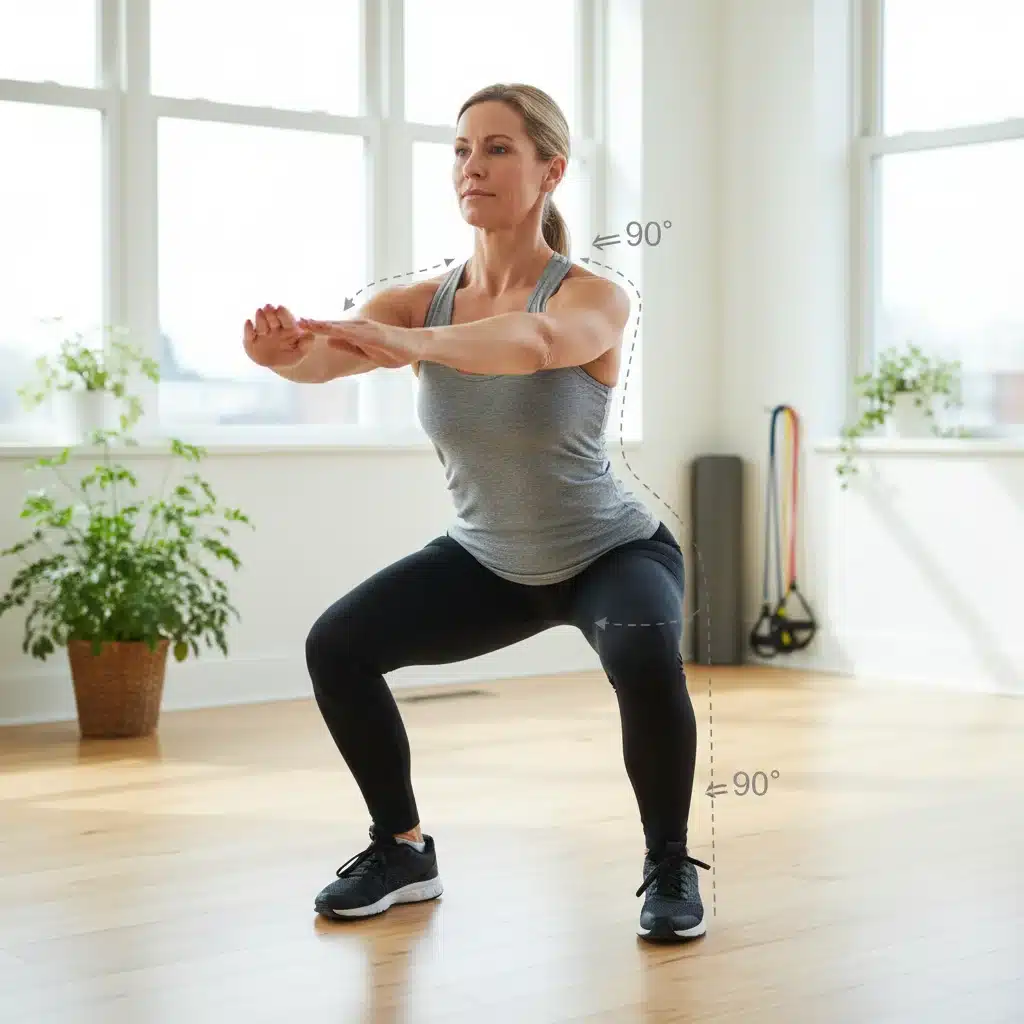
1. The Bodyweight Squat (or Goblet Squat)
The squat is often called the ‘king of exercises’ for good reason. It’s a fundamental human movement that strengthens the entire lower body (quadriceps, hamstrings, glutes) and core, while also improving hip mobility and balance. For longevity strength training, mastering the squat is crucial for maintaining independence and preventing falls.
How to Perform:
- Stand with your feet shoulder-width apart, toes pointing slightly outward.
- Keep your chest up, shoulders back, and core engaged.
- Initiate the movement by pushing your hips back as if you’re sitting into a chair.
- Lower yourself until your thighs are parallel to the floor, or as deep as comfortable while maintaining good form.
- Ensure your knees track in line with your toes and don’t collapse inward.
- Push through your heels to return to the starting position, squeezing your glutes at the top.
Progression for Longevity:
- Beginner: Use a chair to squat down to, or hold onto a stable support.
- Intermediate: Perform bodyweight squats with full range of motion.
- Advanced: Introduce a light dumbbell held at chest level (Goblet Squat) for added resistance, or explore variations like sumo squats.
2. The Push-Up (or Incline Push-Up)
The push-up is a fantastic upper-body and core exercise that strengthens the chest, shoulders, triceps, and abdominal muscles. It’s a functional movement that helps with pushing objects, getting up from the floor, and maintaining upper body strength, all vital for longevity strength training.
How to Perform (Standard Push-Up):
- Start in a plank position with your hands slightly wider than shoulder-width apart, fingers pointing forward.
- Keep your body in a straight line from head to heels, core tight, and glutes squeezed.
- Lower your chest towards the floor by bending your elbows, keeping them tucked in slightly (not flared out).
- Go as low as you can while maintaining good form, ideally until your chest is just above the floor.
- Push through your palms to return to the starting plank position.
Progression for Longevity:
- Beginner: Perform incline push-ups against a wall, counter, or sturdy bench. The higher the incline, the easier it is.
- Intermediate: Perform push-ups from your knees or on your toes with a limited range of motion.
- Advanced: Full push-ups on your toes, or even decline push-ups with your feet elevated.
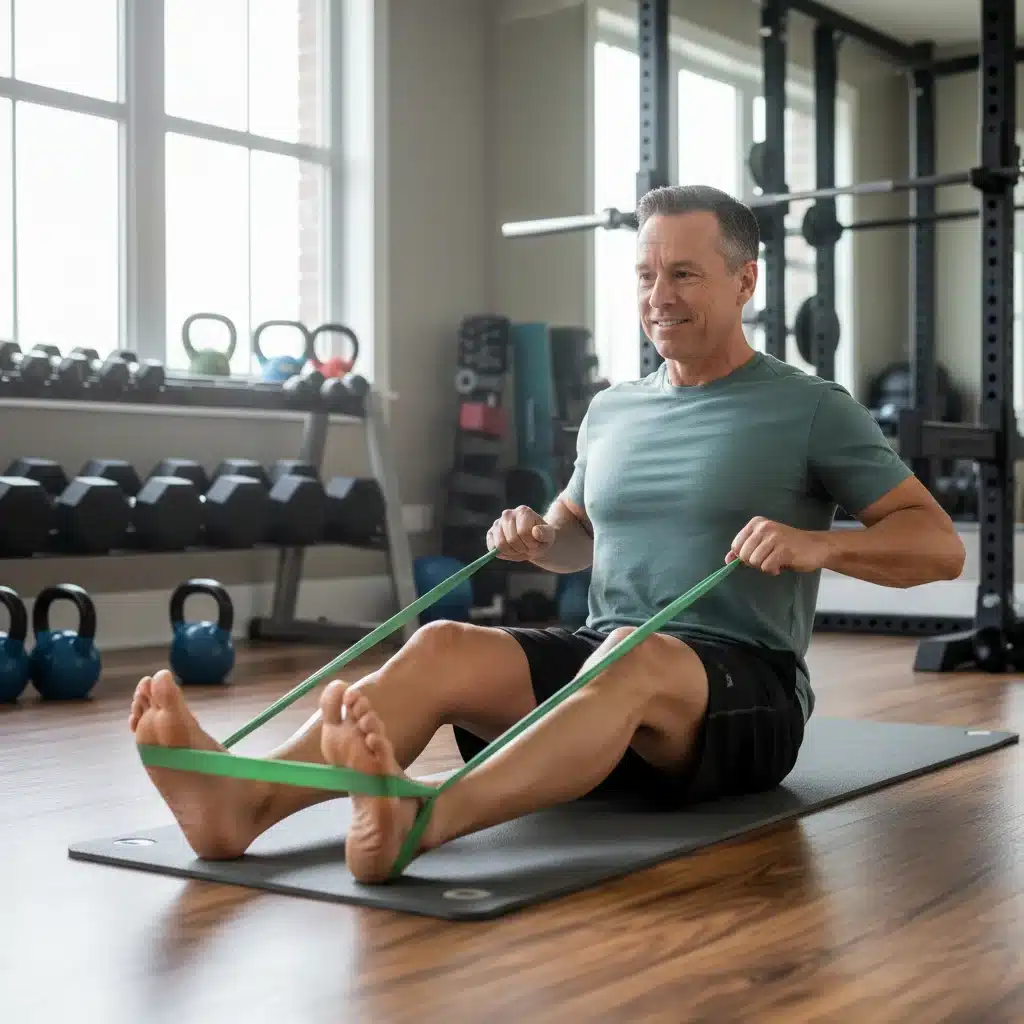
3. The Resistance Band Row (or Dumbbell Row)
Often, adults over 40 neglect their back muscles, leading to poor posture and back pain. The row is a pulling movement that targets the muscles of the upper and mid-back (lats, rhomboids, trapezius) and biceps. Strengthening these muscles is crucial for improving posture, reducing shoulder and back pain, and maintaining functional strength for everyday tasks like pulling open doors or carrying groceries. This is a key component of effective longevity strength training.
How to Perform (Resistance Band Row):
- Sit on the floor with your legs extended in front of you. Loop a resistance band around the soles of your feet, holding one end of the band in each hand.
- Keep your back straight, chest up, and core engaged.
- Pull the band towards your torso, squeezing your shoulder blades together. Imagine you’re trying to pinch a pencil between your shoulder blades.
- Keep your elbows close to your body and avoid shrugging your shoulders towards your ears.
- Slowly release the tension, extending your arms forward with control.
Progression for Longevity:
- Beginner: Use a lighter resistance band or perform single-arm rows.
- Intermediate: Use a stronger resistance band or perform seated cable rows at a gym.
- Advanced: Perform dumbbell rows with increasing weight, ensuring strict form.
4. The Plank
The plank is an isometric exercise that is incredibly effective for strengthening the entire core, including the deep abdominal muscles, obliques, and lower back. A strong core is fundamental for good posture, preventing back pain, and providing stability for all other movements, making it indispensable for longevity strength training.
How to Perform:
- Start in a push-up position, then lower down onto your forearms, keeping your elbows directly beneath your shoulders.
- Your body should form a straight line from your head to your heels. Avoid letting your hips sag or rise too high.
- Engage your core by pulling your belly button towards your spine. Squeeze your glutes.
- Hold this position for a designated amount of time, focusing on maintaining perfect form.
Progression for Longevity:
- Beginner: Perform plank on your knees or hold for shorter durations (e.g., 20-30 seconds).
- Intermediate: Hold a standard plank on your toes for 30-60 seconds.
- Advanced: Introduce variations like side planks, planks with leg lifts, or plank jacks.
5. The Glute Bridge
The glute bridge is an excellent exercise for strengthening the glutes (buttocks muscles) and hamstrings, as well as the core. Strong glutes are essential for hip extension, walking, running, and protecting the lower back. This exercise is gentle on the joints and highly effective for building foundational strength crucial for longevity strength training.
How to Perform:
- Lie on your back with your knees bent, feet flat on the floor, and arms by your sides. Your feet should be about hip-width apart and close enough so you can just touch your heels with your fingertips.
- Engage your core and glutes.
- Push through your heels to lift your hips off the floor until your body forms a straight line from your shoulders to your knees.
- Squeeze your glutes at the top of the movement.
- Slowly lower your hips back down to the starting position with control.
Progression for Longevity:
- Beginner: Perform standard glute bridges, focusing on glute activation.
- Intermediate: Place a light dumbbell across your hips for added resistance, or perform single-leg glute bridges.
- Advanced: Progress to hip thrusts with heavier weights if comfortable and with proper guidance.
Integrating These Exercises into Your Routine for 2026 and Beyond
To effectively incorporate these longevity strength training exercises into your weekly routine, consider the following:
- Frequency: Aim for 2-3 full-body strength training sessions per week, with at least one day of rest in between.
- Sets and Reps: For general strength and endurance, 2-3 sets of 8-15 repetitions per exercise is a good starting point. For planks, aim for 3 sets, holding for 30-60 seconds.
- Warm-up: 5-10 minutes of light cardio (e.g., brisk walking, cycling) followed by dynamic stretches (arm circles, leg swings).
- Cool-down: 5-10 minutes of static stretches, holding each stretch for 20-30 seconds.
- Listen to Your Body: If an exercise causes pain, stop and modify it. There are always alternatives.
- Consistency: The most important factor is showing up consistently. Even short, effective workouts are better than sporadic, intense ones.
Remember, the goal of longevity strength training isn’t to become a bodybuilder, but to build a resilient, functional body that supports you through all stages of life. As we move further into 2026, the focus on holistic well-being will only intensify, and strength training will remain a critical pillar.
Nutrition and Recovery: The Unsung Heroes of Longevity Strength Training
While the exercises themselves are fundamental, their effectiveness is significantly amplified by proper nutrition and adequate recovery. These two components are often overlooked but are absolutely vital for adults over 40 engaging in longevity strength training.
Fueling Your Body: The Nutritional Blueprint
- Protein Power: Protein is the building block of muscle. As we age, our bodies become less efficient at utilizing protein, making adequate intake even more crucial. Aim for 0.7-1 gram of protein per pound of body weight, spread throughout the day. Lean meats, fish, eggs, dairy, legumes, and protein supplements are excellent sources.
- Complex Carbohydrates: These provide the energy needed for your workouts and help replenish glycogen stores afterward. Think whole grains, fruits, and vegetables. Avoid excessive processed sugars.
- Healthy Fats: Essential for hormone production, nutrient absorption, and reducing inflammation. Include sources like avocados, nuts, seeds, and olive oil.
- Hydration: Water is critical for all bodily functions, including muscle performance, joint lubrication, and nutrient transport. Drink plenty of water throughout the day, especially before, during, and after workouts.
- Micronutrients: Don’t forget vitamins and minerals! Calcium and Vitamin D are particularly important for bone health, while magnesium plays a role in muscle function and recovery. A diet rich in diverse fruits and vegetables typically covers most needs.
The Art of Recovery: Rest, Sleep, and Stress Management
- Adequate Sleep: This is arguably the most underrated aspect of recovery. During sleep, your body repairs muscle tissue, consolidates memories, and regulates hormones. Aim for 7-9 hours of quality sleep per night. Poor sleep can hinder progress and increase injury risk.
- Active Recovery: On your rest days, engage in light activities like walking, gentle stretching, or yoga. This can help improve blood flow, reduce muscle soreness, and promote flexibility without overstressing your body.
- Stress Management: Chronic stress elevates cortisol levels, which can break down muscle tissue and hinder recovery. Incorporate stress-reducing practices like meditation, deep breathing exercises, or spending time in nature.
- Listen to Your Body: Pay attention to signs of overtraining, such as persistent fatigue, decreased performance, or prolonged muscle soreness. Don’t be afraid to take an extra rest day if needed.
The Psychological Benefits of Consistent Longevity Strength Training
Beyond the physical transformations, longevity strength training offers profound psychological advantages that contribute significantly to overall well-being as we age. In 2026, where mental resilience is highly valued, these benefits are more important than ever.
- Increased Self-Efficacy and Confidence: As you get stronger and see tangible progress, your belief in your ability to accomplish goals (both inside and outside the gym) grows. This boosts self-confidence and empowers you to take on new challenges.
- Improved Body Image and Self-Esteem: Feeling strong and capable can dramatically improve how you view your body, shifting the focus from aesthetic ideals to functional appreciation. This positive body image is crucial for mental health.
- Stress Reduction and Mood Enhancement: Physical activity, especially strength training, releases endorphins, natural mood elevators. It also provides an outlet for stress, helping to clear your mind and reduce feelings of anxiety and depression.
- Enhanced Cognitive Function: Studies suggest a link between strength training and improved cognitive function, including better memory, attention, and executive function. This can help maintain mental sharpness as you age.
- Sense of Accomplishment and Purpose: Setting and achieving fitness goals, even small ones, provides a powerful sense of accomplishment. This can translate into a renewed sense of purpose and motivation in other areas of life.
- Social Connection: If you train in a gym or with a group, strength training can be a great way to foster social connections and build a supportive community, which is vital for mental health and combating loneliness.
Common Misconceptions About Strength Training Over 40
There are several myths that often deter adults over 40 from embracing longevity strength training. Let’s debunk a few of them:
- "I’m too old to start." It’s never too late to start reaping the benefits of strength training. Studies consistently show that individuals can build muscle and strength at any age, even into their 80s and 90s.
- "I’ll get too bulky." This is a common fear, especially among women. Building significant muscle mass is extremely difficult and requires specific training protocols and dietary intake. For most people, strength training will result in a leaner, more toned physique, not excessive bulk.
- "It’s bad for my joints." On the contrary, when performed with proper form, strength training strengthens the muscles and connective tissues around joints, providing stability and reducing pain. It can actually be therapeutic for certain joint conditions.
- "Cardio is enough for health." While cardio is vital for cardiovascular health, it doesn’t offer the same bone-building and muscle-preserving benefits as strength training. For comprehensive longevity, both are necessary.
- "I need a gym membership." As demonstrated by some of the exercises above, effective strength training can be done at home with minimal or no equipment. Bodyweight exercises, resistance bands, and even household items can provide sufficient resistance.
Conclusion: Your Path to a Stronger, Healthier 2026 and Beyond
The journey towards a longer, healthier life for adults over 40 is multifaceted, but longevity strength training stands out as one of its most impactful components. By dedicating just a few hours a week to these essential exercises – squats, push-ups, rows, planks, and glute bridges – you are not just building muscle; you are investing in your future self.
In 2026, as health consciousness continues to evolve, the emphasis on functional fitness and preventive care will only grow. Embrace the power of strength training to combat age-related decline, enhance your physical capabilities, boost your mental well-being, and ultimately, enrich your life with vitality and independence for decades to come. Start small, stay consistent, listen to your body, and enjoy the profound benefits that await you on this rewarding path.