Mastering Mind-Muscle Connection: 6 Techniques for Optimal Growth in 2026

Mastering Mind-Muscle Connection: 6 Techniques for Optimal Growth in 2026
In the ever-evolving landscape of fitness, where new trends and methodologies emerge constantly, some foundational principles remain timeless. Among these, the concept of mind-muscle connection stands as a cornerstone for anyone serious about maximizing their workout results and achieving significant muscle growth. As we step into 2026, the emphasis on quality over quantity in training becomes even more pronounced, making the ability to truly connect with and feel the working muscle paramount. This isn’t just about lifting heavy; it’s about lifting smart, with purpose and precision.
For years, fitness enthusiasts and bodybuilders have intuitively understood the power of focusing on the contracting muscle. Science has now caught up, with numerous studies validating the effectiveness of a strong mind-muscle connection in enhancing muscle activation, hypertrophy, and overall strength gains. It’s the difference between merely going through the motions and truly stimulating the target muscle fibers. Without this crucial connection, you might be lifting weights, but you’re not necessarily optimizing your effort for muscle development. You could be recruiting secondary muscles more than intended, or simply failing to engage the primary mover to its fullest potential.
Imagine performing a bicep curl. Are you just swinging the weight up, letting momentum and your shoulders do most of the work? Or are you consciously squeezing your bicep, feeling each fiber contract and extend, guiding the weight through a controlled range of motion? The latter approach, driven by a strong mind-muscle connection, is what separates average results from exceptional ones. It transforms a simple exercise into a powerful growth stimulus.
This comprehensive guide will delve into what mind-muscle connection truly means, why it’s indispensable for your fitness journey in 2026 and beyond, and most importantly, equip you with 6 highly effective techniques to cultivate and strengthen this vital skill. Whether you’re a seasoned lifter looking to break through a plateau or a beginner eager to build a solid foundation, mastering these techniques will undoubtedly elevate your training experience and accelerate your progress towards your aesthetic and performance goals.
We’ll explore practical strategies you can implement immediately, from visualization and tactile cues to tempo control and pre-activation. By the end of this article, you’ll have a clear roadmap to integrate a powerful mind-muscle connection into every single rep, set, and workout, ensuring that every drop of sweat contributes meaningfully to your muscular development. Let’s unlock the full potential of your body and mind in the gym.
What Exactly is Mind-Muscle Connection?
At its core, the mind-muscle connection refers to the conscious and deliberate focus on the muscle you are trying to work during an exercise. It’s the ability to mentally direct your attention and effort to a specific muscle or muscle group, consciously feeling it contract and relax throughout the entire range of motion. This isn’t some mystical, esoteric concept; it’s a neurological skill that can be developed and refined with practice.
Think of it as actively engaging your brain in the lifting process. Instead of just moving a weight from point A to point B, you are commanding your nervous system to preferentially activate the target muscle. This enhanced neural drive leads to a greater recruitment of muscle fibers in the intended area, which is precisely what we want for muscle growth, or hypertrophy.
The Science Behind the Connection
Research, particularly studies utilizing electromyography (EMG), has provided compelling evidence for the efficacy of the mind-muscle connection. EMG measures the electrical activity produced by skeletal muscles. When subjects are instructed to focus on contracting a specific muscle during an exercise, EMG readings often show significantly higher activation in that muscle compared to when they are simply told to lift the weight. For instance, studies on the bench press have shown that focusing on the pectorals can increase pectoral activation, while focusing on the triceps can shift activation towards the triceps.
This enhanced activation translates directly into better results. A meta-analysis published in the Journal of Strength and Conditioning Research highlighted that an internal focus of attention (focusing on the sensation of the muscle) can lead to greater muscle hypertrophy in trained individuals, especially during exercises for specific muscle groups like the biceps or triceps. This doesn’t mean an external focus (focusing on the movement of the weight or an external target) is useless; rather, it suggests that for hypertrophy, an internal focus, or mind-muscle connection, holds a distinct advantage.
Why It’s Crucial for Muscle Growth
The primary reason the mind-muscle connection is so crucial for muscle growth is its role in optimizing muscle activation. When you consciously engage a muscle, you’re better able to:
- Recruit More Muscle Fibers: A stronger neural drive means more motor units are activated, leading to a greater number of muscle fibers contracting. This is fundamental for hypertrophy.
- Improve Form and Reduce Injury Risk: By focusing on the target muscle, you naturally tend to use better form, preventing other muscles from taking over and reducing the risk of injury. This also ensures the stress is placed where it’s intended.
- Increase Time Under Tension (TUT): A conscious connection often leads to slower, more controlled movements, increasing the time the muscle is under tension. TUT is a key driver of muscle growth.
- Overcome Plateaus: If you’re stuck, improving your mind-muscle connection can be the missing piece. It allows you to squeeze more out of each rep, even with the same weight, providing a new stimulus for growth.
- Enhance Proprioception: This is your body’s ability to sense its position, movement, and action. A strong mind-muscle connection refines proprioception, making you more aware of your body in space and how your muscles are working.
Understanding this foundational concept is the first step. Now, let’s explore the practical techniques you can employ to forge an unbreakable mind-muscle connection and revolutionize your workouts in 2026.
Technique 1: Intentional Squeeze and Peak Contraction
This is perhaps the most fundamental and universally applicable technique for fostering a strong mind-muscle connection. The intentional squeeze involves actively contracting the target muscle as hard as possible at the peak of the movement, holding that contraction for a brief moment, and truly feeling the muscle work.
How to Implement:
- Slow Down Your Reps: Forget about speed. Perform your repetitions in a slow, controlled manner, especially during the concentric (lifting) phase. Aim for a 2-3 second concentric phase.
- Focus on the Peak: As you reach the point of maximum contraction (e.g., at the top of a bicep curl, at the bottom of a tricep pushdown, or when your chest is fully contracted during a fly), consciously squeeze the target muscle as if you’re trying to crush something between your muscle fibers.
- Hold the Contraction: Hold this peak contraction for 1-2 seconds. This brief isometric hold maximizes fiber recruitment and enhances the neural pathway to that muscle.
- Control the Eccentric: Do not neglect the eccentric (lowering) phase. Lower the weight slowly and under control, feeling the muscle stretch and resist the weight. This also contributes significantly to muscle growth.
Example: Bicep Curl
Instead of just curling the weight up, imagine your bicep is a sponge that you’re trying to wring out completely. As you curl the weight upwards, focus all your mental energy on contracting that bicep. At the very top, squeeze it hard, feeling the knot of muscle. Then, slowly lower the weight, resisting the pull of gravity and feeling the stretch in your bicep.
This technique forces you to be present in the moment and truly feel the muscle working, establishing a powerful mind-muscle connection from the very first rep.
Technique 2: Visualization and Mental Rehearsal
Your mind is an incredibly powerful tool. Harnessing visualization can significantly amplify your mind-muscle connection. This technique involves mentally rehearsing the movement and visualizing the target muscle contracting before and during the exercise.
How to Implement:
- Before the Set: Take a few deep breaths. Close your eyes for a moment if comfortable. Mentally picture the exercise you are about to perform.
- Visualize the Muscle: See the specific muscle you are targeting. Imagine its fibers, how they attach, and how they will contract and shorten during the movement. For example, for a back exercise, visualize your lats flaring and pulling.
- Feel the Contraction: As you visualize, try to mentally ‘feel’ the muscle contracting. Imagine the blood rushing into it, the fibers tearing and rebuilding stronger.
- During the Set: Keep this mental image and feeling throughout the entire set. As you perform each rep, ‘see’ and ‘feel’ the muscle working in your mind’s eye.

Example: Bench Press
Before you even unrack the bar, lie down and close your eyes. Visualize your pectoral muscles. See them expand as you lower the bar, and then powerfully contract to press the weight back up. Feel the tension building in your chest. Maintain this mental focus throughout the set, treating each rep as a deliberate contraction of your pecs, rather than just pushing the bar away.
Visualization primes your nervous system, making it easier for your brain to send stronger signals to the target muscle, thereby strengthening your mind-muscle connection.
Technique 3: Tactile Feedback and Touching the Muscle
Sometimes, the most direct approach is the most effective. Physically touching the muscle you are trying to engage can provide immediate tactile feedback, helping you to ‘find’ and feel the contraction more effectively. This is especially useful for muscles that are difficult to connect with initially, or for beginners.
How to Implement:
- Self-Palpation: During an exercise, use your free hand (if possible and safe) to touch and feel the target muscle as it contracts. For example, during a bicep curl, place your non-working hand on your bicep.
- Partner Assistance: If you have a training partner, ask them to gently place their hand on the muscle you are working. Their touch can help you become more aware of the contraction.
- Mirror Feedback: Position yourself in front of a mirror. While performing the exercise, watch the target muscle contract and observe its movement. This visual feedback reinforces the physical sensation.
Example: Tricep Pushdown
When performing tricep pushdowns, place your non-working hand on the head of your tricep. As you push the bar down, actively try to feel your tricep contract and harden under your touch. This direct sensory input can dramatically improve your awareness of the muscle’s engagement.
The tactile sensation creates a stronger sensory link between your brain and the muscle, making it easier to establish and maintain your mind-muscle connection.
Technique 4: Pre-Activation and Warm-up Sets
Sometimes, simply jumping into your working sets isn’t enough to establish a strong mind-muscle connection. Pre-activating the target muscle with specific warm-up exercises can ‘wake up’ the muscle and improve its readiness to be fully engaged during your main lifts.
How to Implement:
- Light Isolation Exercises: Before your compound movements, perform 1-2 sets of a very light isolation exercise for the target muscle. Focus purely on feeling the muscle contract, not on lifting heavy.
- High Reps, Low Weight: Use a very light weight that allows for 15-20 repetitions with perfect form and a deliberate squeeze. The goal is to get blood flowing and neural pathways firing.
- Dynamic Stretches: Incorporate dynamic stretches that specifically target the muscle group you’re about to train. This increases blood flow and prepares the muscle for activation.
Example: Leg Day Warm-up
Before heavy squats or leg presses, perform a few sets of bodyweight squats or very light leg extensions. Focus intently on squeezing your quads at the top of the leg extension, or driving through your heels and engaging your glutes during bodyweight squats. This pre-activation will make it much easier to feel your quads and glutes during your heavier compound movements, enhancing your mind-muscle connection.
Pre-activation essentially sends an urgent memo to your brain: ‘Hey, this muscle is about to work! Pay attention!’ This improved neural readiness makes it easier to establish a strong mind-muscle connection.
Technique 5: Tempo Training and Pauses
Manipulating the tempo of your repetitions and incorporating strategic pauses can significantly enhance your mind-muscle connection. By controlling the speed of each phase of the lift, you eliminate momentum and force the target muscle to do all the work.
How to Implement:
- Eccentric Focus: Emphasize the eccentric (lowering) phase. Aim for a 3-4 second eccentric count. This is where a lot of muscle damage (the good kind, leading to growth) occurs, and it allows for heightened awareness of the muscle stretching under tension.
- Concentric Control: While the concentric (lifting) phase can be more explosive, ensure it’s still controlled. Avoid jerky movements that rely on momentum.
- Isometric Pauses: Introduce pauses at critical points in the movement. This could be at the bottom of a squat, at the peak contraction of a row, or halfway through a press. Holding the weight in a static position forces the muscle to stabilize and work harder, deepening the connection.
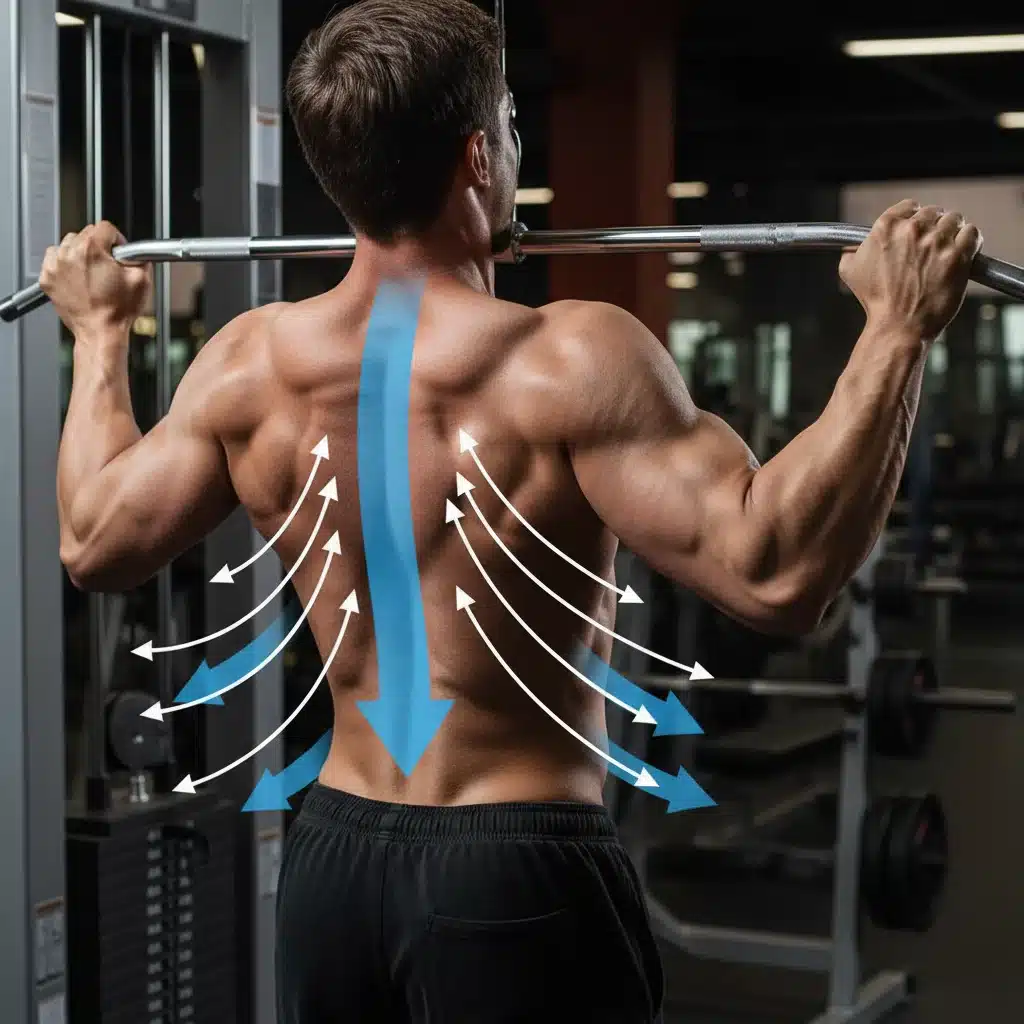
Example: Lat Pulldown
Instead of just pulling the bar down quickly, focus on a 2-second pull down, squeezing your lats hard at the bottom for a 1-second pause. Then, slowly control the weight back up over 3-4 seconds, feeling the stretch in your lats. This deliberate tempo removes momentum and forces your lats to be fully engaged throughout the entire repetition, creating a profound mind-muscle connection.
Tempo training ensures that the muscle is under continuous tension, making it impossible to ignore its contribution to the movement. This constant feedback loop strengthens the mind-muscle connection.
Technique 6: Reduce Weight and Prioritize Form
This might sound counterintuitive to those focused solely on lifting heavy, but it’s a critical step in developing a strong mind-muscle connection. Often, when the weight is too heavy, the body will naturally recruit secondary muscles and use momentum to complete the lift, sacrificing the ability to isolate and feel the target muscle.
How to Implement:
- Check Your Ego at the Door: Be willing to lower the weight significantly if you find yourself struggling to feel the target muscle. It’s not about how much you lift, but how well you lift it.
- Master the Movement Pattern: Focus on perfect form. Understand the biomechanics of the exercise and ensure your body is moving in the most efficient way to target the intended muscle.
- Progressive Overload with Connection: Once you can consistently feel the target muscle with good form and a strong mind-muscle connection, then gradually increase the weight. The goal is to maintain that connection even as the load increases.
Example: Shoulder Press
If you’re struggling to feel your deltoids during a shoulder press and instead feel it mostly in your triceps or traps, try reducing the weight by 20-30%. Focus intently on initiating the movement with your deltoids, pressing upwards, and feeling them contract at the top. Once you’ve established that strong connection with the lighter weight, then slowly work your way back up, ensuring the connection remains intact.
Prioritizing form and reducing weight allows you to strip away compensatory movements and truly isolate the target muscle, creating a pristine environment for developing your mind-muscle connection. Remember, the weight is merely a tool to stimulate the muscle, not an end in itself.
Integrating Mind-Muscle Connection into Your Training Routine for 2026
Now that you’re equipped with these 6 powerful techniques, the next step is to seamlessly integrate them into your existing training routine. This isn’t about adding extra exercises; it’s about changing how you approach every single exercise you already do. The goal for 2026 is to make mind-muscle connection a non-negotiable component of every workout.
Tips for Successful Integration:
- Start Small: Don’t try to implement all six techniques perfectly in every exercise from day one. Pick one or two techniques and apply them to a couple of exercises where you typically struggle with connection.
- Be Patient: Developing a strong mind-muscle connection is a skill that takes time and consistent practice. Don’t get discouraged if it doesn’t click immediately.
- Journal Your Progress: Keep a workout journal. Note down which techniques you used for which exercises and how well you felt the target muscle. This feedback will help you refine your approach.
- Warm-up is Key: Always use your warm-up sets as an opportunity to establish your mind-muscle connection before moving to heavier weights. This sets the tone for the entire workout.
- Listen to Your Body: Pay attention to what your body is telling you. If you’re not feeling the target muscle, adjust your form, tempo, or even the weight until you do.
- Educate Yourself on Anatomy: A basic understanding of muscle anatomy and function can significantly aid in visualization and feeling the muscle. Knowing where a muscle originates and inserts, and what its primary function is, helps in mentally directing the contraction.
- Minimize Distractions: In today’s hyper-connected world, distractions are everywhere. Put your phone away, minimize conversations, and create a focused environment to truly concentrate on your training.
By consistently applying these techniques, you’ll start to notice profound changes in your workouts. You’ll feel a deeper burn in the target muscles, experience greater pumps, and ultimately, see more significant and sustained muscle growth. The quality of your contractions will improve, leading to more efficient workouts and better overall results.
The Long-Term Benefits of a Strong Mind-Muscle Connection
Beyond immediate workout enhancement, cultivating a strong mind-muscle connection offers a host of long-term benefits that will serve your fitness journey well into 2026 and beyond:
- Enhanced Muscle Hypertrophy: As discussed, this is the primary driver for muscle growth. More effective muscle activation means more growth.
- Improved Neuromuscular Efficiency: Your brain becomes better at communicating with your muscles, leading to more efficient and powerful movements in and out of the gym.
- Greater Body Awareness: You’ll develop a deeper understanding of your own body, how it moves, and how different muscles contribute to various actions. This can translate to better posture, balance, and coordination.
- Reduced Risk of Injury: By focusing on proper form and muscle engagement, you’re less likely to put undue stress on joints, ligaments, and tendons, thus reducing the risk of training-related injuries.
- Better Exercise Selection: With a strong connection, you’ll intuitively know which exercises are truly working for you and which ones might not be effectively stimulating your target muscles.
- Increased Workout Enjoyment: There’s a unique satisfaction that comes from truly feeling your muscles work and knowing you’re getting the most out of every single rep. This intrinsic motivation can keep you consistent and engaged.
- Longevity in Training: By training smarter and more efficiently, you can sustain your fitness efforts for many years, avoiding burnout and injury, and continuing to make progress well into the future.
In 2026, as fitness science continues to advance, the fundamentals of effective training remain constant. The mind-muscle connection is not a fleeting trend but a timeless principle that empowers you to become a more effective and intelligent lifter. It’s about transforming your workouts from mere physical exertion into a thoughtful, intentional practice that yields superior results.
Conclusion: Elevate Your Workouts in 2026 with Mind-Muscle Connection
The journey to optimal muscle growth and peak physical performance is multifaceted, but at its heart lies the powerful synergy between your mind and your muscles. The ability to forge a strong mind-muscle connection is not an innate talent but a learnable skill that, once mastered, will unlock new levels of progress and efficiency in your training. By consciously engaging with your body and directing your mental focus, you transform every lift into a highly effective stimulus for growth.
The 6 techniques we’ve explored – intentional squeeze, visualization, tactile feedback, pre-activation, tempo training, and reducing weight for form – provide a comprehensive toolkit for cultivating this essential connection. They are not isolated strategies but complementary approaches that, when combined, create a holistic framework for superior muscle activation and development. As you step into your workouts in 2026, make the commitment to train with intention, to feel every contraction, and to truly connect with the muscles you are striving to build.
Remember, the weights are simply tools; your mind is the master craftsman. By honing your mind-muscle connection, you are not just lifting iron; you are sculpting your physique with precision and purpose. Embrace these techniques, practice them diligently, and prepare to witness remarkable transformations in your strength, size, and overall body awareness. Your strongest, most connected self awaits in 2026.