Functional Fitness Daily: Beyond the Gym in 2026

Welcome to 2026! As we embark on another year, many of us are setting new goals for our health and well-being. While traditional gym memberships and structured workout routines certainly have their place, there’s a growing movement towards something more intuitive, more integrated, and ultimately, more sustainable: functional fitness daily. This isn’t just about lifting heavy weights or running marathons; it’s about training your body for the movements you perform every single day, making you stronger, more agile, and less prone to injury in your everyday life. Imagine bending down to pick up a child, carrying groceries, or even just getting out of bed with greater ease and less strain. That’s the power of incorporating functional fitness into your daily routine.
In this comprehensive guide, we’ll delve deep into what functional fitness truly entails, why it’s becoming increasingly vital in our modern, often sedentary lives, and most importantly, how you can seamlessly weave functional fitness daily into your life, moving beyond the confines of a gym. We’ll explore practical exercises, mindset shifts, and actionable strategies that will empower you to transform ordinary tasks into opportunities for strength, flexibility, and balance. Get ready to redefine your relationship with exercise and discover a path to sustained health and vitality throughout 2026 and beyond.
What Exactly is Functional Fitness?
At its core, functional fitness is about training your body to perform real-life activities in real-life situations. Unlike isolation exercises that target specific muscles in a controlled environment (think bicep curls or leg extensions), functional fitness focuses on compound movements that engage multiple muscle groups and joints simultaneously. These movements mimic the natural patterns of human motion: pushing, pulling, squatting, hinging, lunging, rotating, and carrying.
The Philosophy Behind Functional Fitness Daily
The philosophy is simple: your body is designed to move in complex ways, not just in linear planes. When you engage in functional fitness daily, you’re not just building muscle; you’re improving your overall movement quality, coordination, balance, and stability. This holistic approach makes you more resilient and capable in all aspects of your life, from recreational sports to household chores. It’s about building a body that works for you, not against you.
Key Characteristics of Functional Movements:
- Multi-joint: Involve several joints working together (e.g., a squat uses ankles, knees, and hips).
- Multi-planar: Move the body through different planes of motion (sagittal, frontal, transverse).
- Proprioceptive rich: Challenge your balance and spatial awareness.
- Core-centric: Emphasize core strength and stability as the foundation for all movement.
- Mimic daily activities: Replicate movements you do in everyday life.
The Unparalleled Benefits of Functional Fitness Daily
Integrating functional fitness into your daily routine offers a myriad of benefits that extend far beyond aesthetics. It’s about enhancing your quality of life, preventing injuries, and fostering long-term health. Let’s explore some of the most impactful advantages:
1. Enhanced Everyday Performance
This is perhaps the most obvious benefit. When you consistently practice functional fitness daily, tasks that once felt challenging become easier. Lifting heavy boxes, carrying children, gardening, climbing stairs, or even just getting up from a low chair – all these movements become smoother, more efficient, and less taxing on your body. Your body learns to move as a cohesive unit, distributing effort effectively and reducing strain on individual joints or muscles.
2. Injury Prevention and Rehabilitation
By strengthening the muscles and improving the stability around your joints, functional training significantly reduces your risk of injury. It addresses muscular imbalances, improves posture, and strengthens stabilizers, all of which are crucial for preventing common aches and pains, especially in the back, knees, and shoulders. Furthermore, functional exercises are often incorporated into rehabilitation programs to help individuals regain strength and mobility after an injury, preparing them for real-world demands.
3. Improved Balance and Stability
Many functional exercises inherently challenge your balance and proprioception (your body’s awareness of its position in space). This is vital for preventing falls, especially as we age, and for maintaining agility and coordination. Think about standing on one leg to put on your shoes, or navigating uneven terrain; strong balance and stability are key.
4. Increased Core Strength and Stability
Every functional movement originates from the core. A strong, stable core is not just about having visible abs; it’s about having a robust foundation that supports your spine, transfers power between your upper and lower body, and allows for efficient, pain-free movement. Functional fitness emphasizes dynamic core engagement, teaching your core to work in conjunction with other muscle groups.
5. Greater Flexibility and Mobility
Functional movements often involve a full range of motion at your joints, which helps to improve flexibility and mobility. This means your joints can move through their intended range without restriction, reducing stiffness and increasing your overall freedom of movement. Better mobility can also alleviate muscle tension and improve circulation.
6. Enhanced Calorie Burn and Metabolism
Because functional exercises engage multiple muscle groups simultaneously, they tend to be more metabolically demanding than isolation exercises. This means you burn more calories during your workout and potentially elevate your metabolism for a longer period afterward, contributing to effective weight management and body composition improvements.
7. Better Posture and Reduced Pain
Many modern lifestyles involve prolonged sitting and repetitive, static postures, leading to poor posture and chronic pain. Functional fitness helps to counteract these effects by strengthening the muscles responsible for maintaining good alignment and by encouraging natural, upright movement patterns. This can significantly reduce back, neck, and shoulder pain.
8. Adaptability and Accessibility
One of the greatest advantages of functional fitness is its adaptability. You don’t need expensive gym equipment or a dedicated gym space. Many functional exercises can be performed using just your body weight, household objects, or minimal equipment, making it incredibly accessible for functional fitness daily integration.
Incorporating Functional Fitness Daily: Practical Strategies for 2026
Ready to transform your life with functional fitness? Here’s how you can seamlessly integrate it into your daily routine, even if you have a busy schedule. Remember, consistency is key, and even small changes can yield significant results over time.
1. Start with Bodyweight Basics
Bodyweight exercises are the foundation of functional fitness. They require no equipment and can be done anywhere. Focus on mastering fundamental movements before adding external resistance.
- Squats: Practice proper form. Think about sitting back into a chair. This strengthens your legs, glutes, and core, essential for sitting, standing, and lifting.
- Lunges: Forward, reverse, and lateral lunges improve balance, leg strength, and hip mobility, crucial for walking, climbing, and changing direction.
- Push-ups: A fantastic full-body exercise that strengthens your chest, shoulders, triceps, and core, mimicking pushing objects away or getting up from the floor. Modify by doing them against a wall or on your knees if needed.
- Planks: An ultimate core stabilizer. Hold a straight line from head to heels, engaging your abs and glutes. Essential for spinal health and transferring power.
- Bird-Dog: Improves core stability, balance, and coordination. On all fours, extend opposite arm and leg simultaneously while keeping your core engaged.

2. Turn Chores into Workouts
This is where functional fitness daily truly shines. Every chore is an opportunity to move your body functionally.
- Gardening: Squatting to plant, lunging to weed, bending to prune – gardening is a full-body functional workout. Focus on proper form: squat from your hips, not your lower back.
- Cleaning: Vacuuming involves pushing and pulling, mopping requires core engagement and rotation, and reaching for high shelves works your shoulders and core.
- Carrying Groceries: Instead of making one trip, carry bags in both hands, engaging your core and practicing your farmer’s carry. If you have stairs, walk up and down them a few times.
- Laundry: Squatting to load and unload the machine, carrying baskets, and reaching to hang clothes are all functional movements.
3. Optimize Your Commute and Travel
Even your daily commute can become an opportunity for functional movement.
- Walk or Bike More: If possible, walk or cycle to work or for errands. This builds cardiovascular endurance and leg strength.
- Take the Stairs: Always choose stairs over elevators or escalators. It’s a simple yet effective way to engage your leg muscles and elevate your heart rate.
- Active Standing: If you use public transport, stand instead of sitting. Practice balancing without holding on, engaging your core.
4. Integrate Movement into Your Workday
Combat the effects of prolonged sitting with micro-movements throughout your day.
- Standing Desk: If you have one, use it! Alternate between sitting and standing.
- Desk Stretches: Incorporate simple stretches for your neck, shoulders, and hips every hour or so.
- Walk Breaks: Take short walking breaks every 60-90 minutes. Walk to get water, visit a colleague, or just do a quick lap around the office.
- Wall Sits: During a phone call, find a wall and do a 30-60 second wall sit.
5. Mindful Movement and Awareness
Pay attention to how you move throughout the day. This mindful approach is crucial for functional fitness daily.
- Proper Lifting Technique: When picking something up, hinge at your hips, keep your back straight, and engage your core and legs, rather than rounding your back.
- Posture Checks: Regularly check your posture while sitting, standing, and walking. Are your shoulders back and down? Is your core engaged?
- Dynamic Stretching: Before any physical activity, even light chores, perform dynamic stretches like arm circles, leg swings, and torso twists to warm up your muscles.
Designing a Simple Functional Fitness Daily Routine
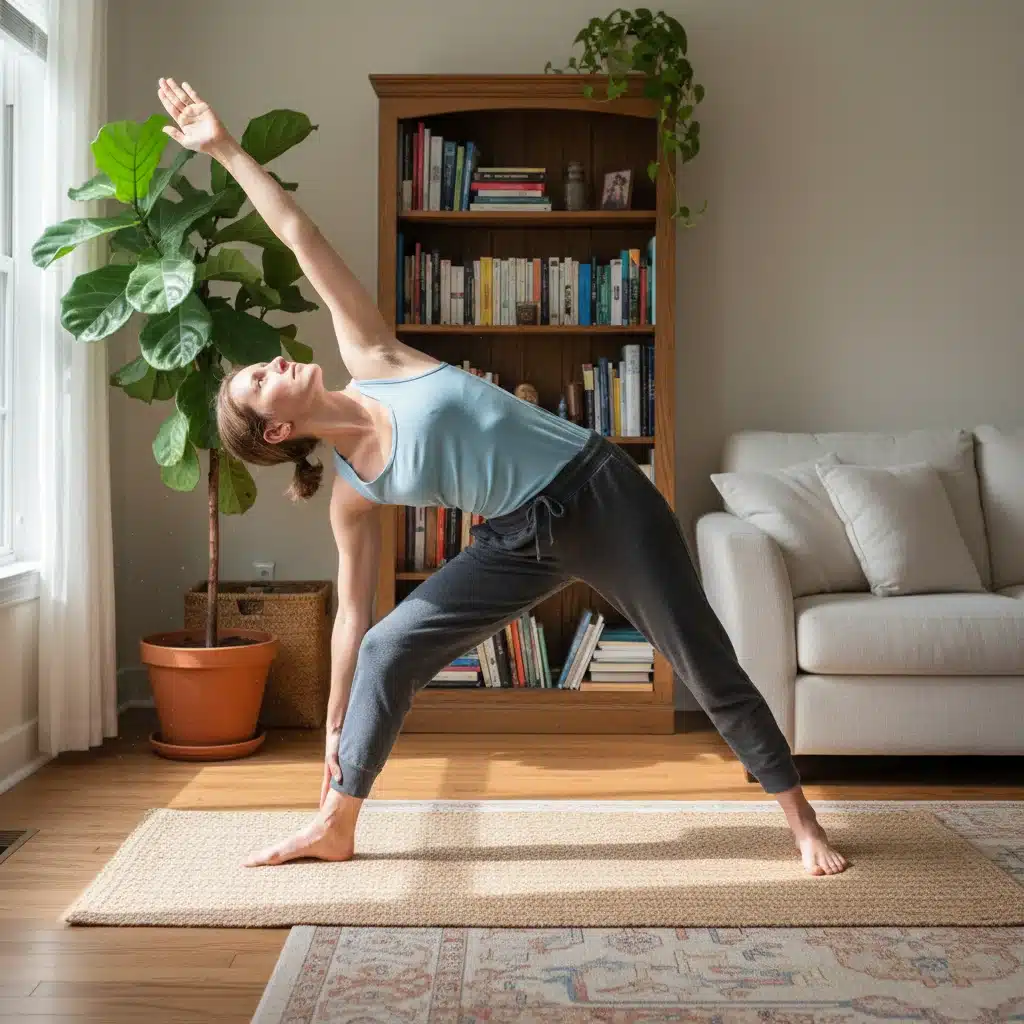
While integrating movement into your daily tasks is excellent, dedicating a small amount of time each day or a few times a week to a structured functional fitness routine can amplify your results. Here’s a sample routine you can adapt:
Warm-up (5 minutes)
- Jumping jacks or high knees (1 minute)
- Arm circles (forward and backward, 30 seconds each)
- Leg swings (forward/backward and side-to-side, 30 seconds each leg)
- Torso twists (1 minute)
Main Workout (15-20 minutes)
Perform each exercise for 30-60 seconds, then rest for 15-30 seconds before moving to the next. Complete 2-3 rounds.
- Bodyweight Squats: Focus on depth and keeping your chest up.
- Reverse Lunges (alternating legs): Step back, keeping your front knee over your ankle.
- Push-ups (on knees or toes): Maintain a straight line, engage your core.
- Plank: Hold a strong, stable position.
- Glute Bridges: Lie on your back, knees bent, lift hips off the floor, squeezing glutes.
- Bird-Dog: Slow and controlled, focus on stability.
- Side Planks (alternating sides): Engage obliques, keep body in a straight line.
Cool-down (5 minutes)
Hold each stretch for 20-30 seconds.
- Hamstring stretch
- Quad stretch
- Triceps stretch
- Chest stretch
- Figure-four stretch (for glutes)
Overcoming Common Challenges to Functional Fitness Daily
Even with the best intentions, integrating functional fitness daily can present challenges. Here’s how to navigate them:
1. Lack of Time
Solution: Micro-workouts and habit stacking. You don’t need an hour-long session. Five to ten minutes of focused functional movements several times a day can be incredibly effective. Pair a new functional movement with an existing habit (e.g., do 10 squats while your coffee brews, or a plank during TV commercials).
2. Motivation Fluctuations
Solution: Find your ‘why’ and celebrate small victories. Remind yourself of the benefits – increased energy, reduced pain, greater independence. Set small, achievable goals and acknowledge your progress. A fitness tracker can also provide motivation.
3. Feeling Awkward or Self-Conscious
Solution: Start at home and focus on form. Many functional movements can be done discreetly. Focus on mastering the correct form in private first. Remember, you’re building a stronger, more capable you, and that’s something to be proud of.
4. Not Knowing Where to Start
Solution: Follow reputable resources and consider professional guidance. Utilize online videos from certified trainers, fitness apps, or consider a few sessions with a personal trainer specializing in functional movement to learn proper form and get a personalized plan. The sample routine above is a great starting point!
5. Plateaus and Boredom
Solution: Vary your movements and add progressions. Once basic bodyweight exercises become easy, challenge yourself. Add resistance (bands, dumbbells, household items), increase repetitions or sets, or try more advanced variations of movements (e.g., jump squats, single-leg deadlifts). Explore different activities like yoga, Pilates, or martial arts, which are inherently functional.
The Future of Fitness: Functional Fitness Daily in 2026 and Beyond
As we look to the future, the emphasis on holistic health and sustainable fitness practices will only grow. The trend is moving away from purely aesthetic goals towards functional capacity and longevity. In 2026, we anticipate even greater integration of technology to support functional fitness daily, with smart devices offering personalized movement coaching, virtual reality workouts simulating real-world scenarios, and AI-driven feedback on form and progress.
The beauty of functional fitness lies in its timelessness. The human body’s fundamental movement patterns remain constant. By honing these movements, we are investing in a future where we can continue to live vibrantly, independently, and without the limitations that poor movement quality can impose. It’s not just about adding years to your life, but adding life to your years.
Conclusion: Embrace Functional Fitness Daily for a Healthier You in 2026
Integrating functional fitness daily into your life is one of the most impactful decisions you can make for your health and well-being in 2026. It’s a paradigm shift from viewing exercise as a separate, often dreaded, activity to understanding it as an inherent part of a vibrant, capable existence. By consciously moving your body in ways that mimic everyday tasks, you’re not just building muscles; you’re building resilience, improving balance, preventing injuries, and enhancing your overall quality of life.
Remember, consistency trumps intensity, especially when starting. Begin with small, manageable changes, focus on proper form, and gradually increase the challenge. Whether it’s taking the stairs, squatting correctly to pick up groceries, or dedicating a few minutes to bodyweight exercises, every functional movement contributes to a stronger, more agile, and more confident you. Let 2026 be the year you truly embrace movement as a way of life, unlocking your body’s full potential, and experiencing the profound benefits of functional fitness daily.
Ready to start your functional fitness journey?
Begin today by choosing one small change from this guide and committing to it. Your future self will thank you.