Progressive Overload Explained: A Step-by-Step Guide to Gaining Strength Safely in 2026

In the vast and often confusing world of fitness, one principle stands as a cornerstone for consistent muscle growth and strength development: progressive overload. If you’ve ever felt stuck in your training, hitting plateaus, or simply not seeing the gains you desire, understanding and effectively implementing progressive overload is likely the missing piece of your puzzle. This isn’t just a buzzword; it’s the fundamental mechanism by which your body adapts and becomes stronger, bigger, and more resilient. In this comprehensive guide, we will delve deep into what progressive overload truly means, why it’s indispensable for your fitness journey, and how you can apply it safely and effectively in 2026 to achieve your goals.
Many individuals embark on a fitness regimen with enthusiasm, diligently performing the same exercises with the same weights and reps week after week. While consistency is commendable, without the element of progressive overload, this approach often leads to stagnation. Your body is an incredibly adaptive machine. When you expose it to a certain stimulus, it adapts to handle that stimulus more efficiently. Once it has adapted, continuing the exact same routine provides no new challenge, and thus, no further reason to grow or get stronger. This is where the power of progressive overload explained comes into play – it’s about continually challenging your body just enough to force it to adapt further.
Imagine your muscles as skilled problem-solvers. When faced with a new, slightly harder problem (a heavier weight, more reps, or a more challenging exercise), they work hard to solve it. Once they’ve solved it, they become stronger and more capable. If you keep giving them the same problem, they won’t feel the need to improve. Progressive overload is the art of consistently presenting your muscles with slightly harder problems, ensuring they are always striving for greater capacity. This guide will serve as your ultimate resource, breaking down complex concepts into actionable steps, ensuring that by the end, you’ll not only understand progressive overload but also feel confident in applying it to revolutionize your training.
What Exactly is Progressive Overload? Unpacking the Core Concept
At its heart, progressive overload is the gradual increase of stress placed upon the musculoskeletal system during exercise training. It’s the driving force behind all adaptations in strength, hypertrophy (muscle growth), and endurance. Without it, your body has no reason to change. Think of it as continually raising the bar for your body. Your body, in turn, responds by building more muscle, increasing bone density, and strengthening connective tissues to meet the new demands.
This principle isn’t exclusive to weightlifting. While it’s most commonly associated with resistance training, progressive overload applies to virtually any physical activity where you seek improvement. For a runner, it might mean running further or faster. For a swimmer, it could be swimming more laps or decreasing lap time. In the context of strength and muscle building, which is our primary focus here, it typically involves manipulating variables within your resistance training program.
The beauty of progressive overload lies in its simplicity and its profound effectiveness. It acknowledges that your body is not static; it’s dynamic and constantly seeking equilibrium. To disrupt that equilibrium and force adaptation, you must systematically increase the challenge. This systematic increase is crucial. It’s not about randomly attempting heavier weights; it’s about a planned, thoughtful progression that respects your body’s recovery capacity and prevents injury. When we talk about progressive overload explained, we’re talking about a strategy, not just an action.
Understanding this core concept is the first step towards unlocking your full potential in the gym. Many people go through the motions, but those who truly understand and apply this principle are the ones who see consistent, long-term results. It’s the difference between working out and training. Working out can be random; training is purposeful, and progressive overload is that purpose.
Why Progressive Overload is Non-Negotiable for Strength and Hypertrophy
If you’re serious about building muscle and gaining strength, progressive overload isn’t just a good idea; it’s absolutely essential. Your muscles grow and get stronger as an adaptive response to stress. When you lift weights, you create microscopic tears in your muscle fibers. During recovery, your body repairs these tears, making the fibers slightly larger and stronger than before, preparing them for the next challenge. This process is known as supercompensation.
Without progressive overload, this adaptive cycle breaks down. If the stress remains constant, your body quickly adapts to it. Once adapted, there’s no longer a sufficient stimulus to trigger further supercompensation. You’ll maintain your current strength and muscle mass, but you won’t make any new gains. This is the dreaded plateau that frustrates so many lifters. Progressive overload explained helps you bypass these plateaus by continually providing a novel, increasing stimulus.
Moreover, progressive overload fosters a growth mindset in your training. It encourages you to consistently strive for improvement, to push your boundaries safely, and to track your progress. This focus on measurable improvement can be incredibly motivating and rewarding. Seeing your numbers go up – whether it’s weight lifted, reps performed, or sets completed – provides tangible evidence of your hard work paying off, reinforcing positive training habits.
It also plays a critical role in preventing your body from becoming too comfortable. The human body is incredibly efficient; it will always try to conserve energy. If a task becomes easy, it finds the most energy-efficient way to perform it. For muscle growth and strength, efficiency isn’t always good. We want to challenge the system to force it to allocate resources to adaptation. Progressive overload ensures that your body never gets too comfortable, consistently forcing it into an adaptive state.
Finally, progressive overload is a key factor in long-term athletic development and injury prevention. By gradually increasing the demands on your body, you’re not only building muscle but also strengthening tendons, ligaments, and bones. This makes your entire musculoskeletal system more robust and less susceptible to injury, setting you up for a sustainable and healthy fitness journey for years to come.
The Many Faces of Progressive Overload: Methods and Strategies
When people hear progressive overload, their first thought is often simply ‘lifting heavier weights.’ While increasing load is a primary and highly effective method, it’s far from the only one. There are numerous ways to progressively overload your muscles, offering flexibility and keeping your training engaging. Understanding these different methods is crucial for continuous progress, especially as you become more advanced and linear progression (simply adding weight) becomes harder.
Here are the most common and effective methods for progressive overload explained:
1. Increase the Load (Weight)
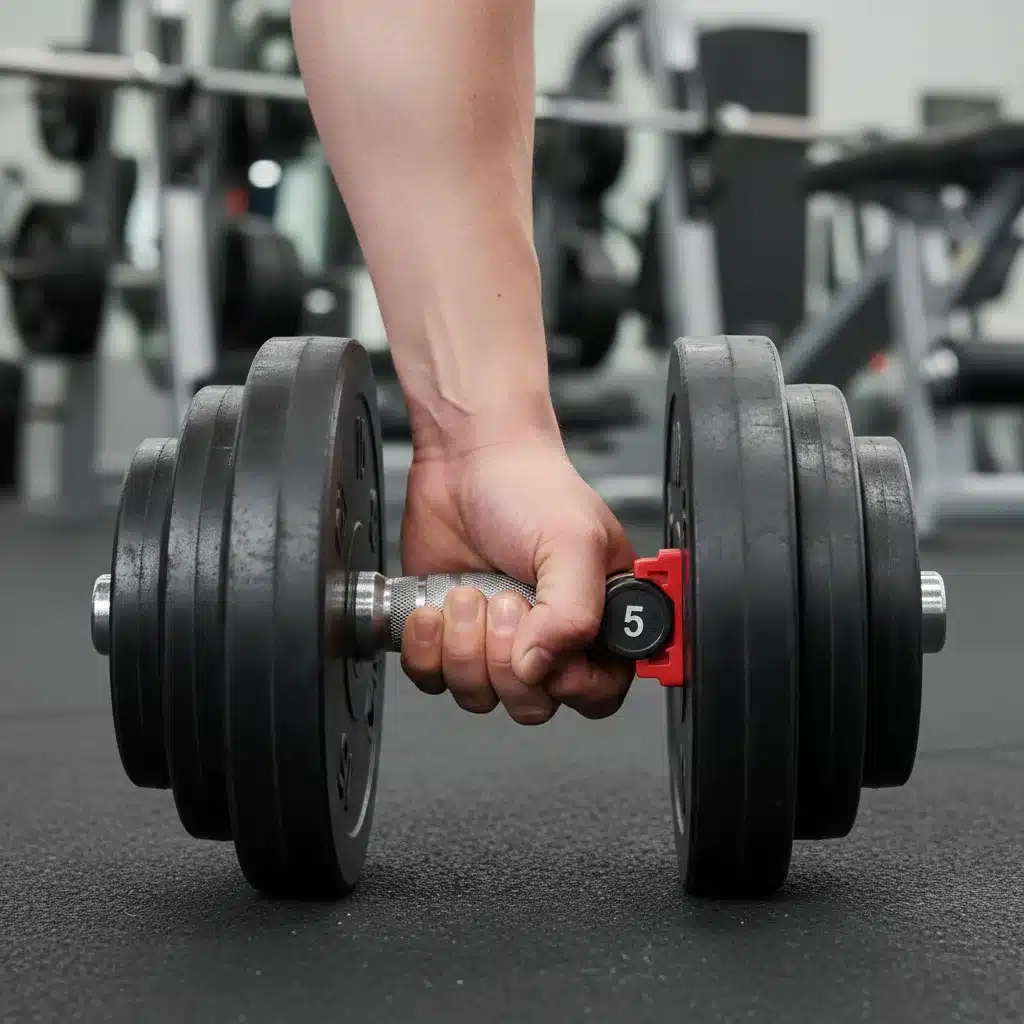
This is the most straightforward and often the first method people think of. If you lifted 100 lbs for 5 reps last week, try 105 lbs for 5 reps this week. Small, consistent increases in weight are highly effective for both strength and hypertrophy. However, remember that ‘small’ is key. Don’t jump too much too fast, as this can compromise form and lead to injury. Focus on maintaining excellent technique with the increased weight.
2. Increase the Repetitions
If you can’t increase the weight, try to do more reps with the same weight. For example, if you did 100 lbs for 8 reps last session, aim for 9 reps or even 10 reps with the same 100 lbs this session. Once you hit the top of your desired rep range (e.g., 12 reps), then it’s time to increase the weight and drop back down to the lower end of the rep range (e.g., 8 reps with the new, heavier weight).
3. Increase the Sets
Adding an extra set to an exercise can significantly increase the total volume of work, thus providing a new stimulus. If you’re doing 3 sets of an exercise, try doing 4 sets. This method is particularly useful for increasing overall workout volume and can be very effective for hypertrophy.
4. Increase the Frequency
Training a muscle group more often throughout the week can also be a form of progressive overload. If you train chest once a week, try training it twice a week. This increases the total weekly stimulus on that muscle group, promoting more growth and strength. Ensure adequate recovery when increasing frequency.
5. Decrease Rest Time Between Sets
Performing the same amount of work (weight x reps x sets) in a shorter amount of time increases the intensity and density of your workout. If you normally rest for 90 seconds between sets, try resting for 60 seconds. This taxes your cardiovascular system more and can improve muscular endurance. This is a great way to progressive overload explained for conditioning.
6. Improve Exercise Form/Technique
While not a direct increase in external load, mastering your form allows you to better target the intended muscles and lift more effectively. A ‘sloppy’ lift might move more weight, but a ‘clean’ lift with less weight might provide a superior stimulus to the target muscle. Once your form is impeccable, you can then safely increase other variables.
7. Increase Time Under Tension (TUT)
This involves controlling the eccentric (lowering) and concentric (lifting) phases of an exercise. For instance, instead of quickly lowering the weight, take 3-4 seconds to lower it. This keeps the muscle under tension for longer, increasing the challenge without necessarily increasing the weight. This is a powerful hypertrophy tool.
8. Add More Challenging Exercises
As you get stronger, you might progress from easier variations of an exercise to more difficult ones. For example, progressing from goblet squats to barbell back squats, or from push-ups to weighted push-ups, or even to a bench press. This introduces a new, higher demand on your muscles.
9. Increase Training Density
This is a combination of decreasing rest time and increasing work. It means doing more work in the same amount of time, or the same amount of work in less time. For example, if you normally complete your workout in 60 minutes, try to complete the same workout in 55 minutes.
Practical Application: How to Implement Progressive Overload Safely
Knowing the methods is one thing; applying them effectively and safely is another. The key to successful progressive overload is systematic planning and careful execution. Here’s a step-by-step guide to integrate this principle into your training:
1. Start with a Baseline and Track Everything
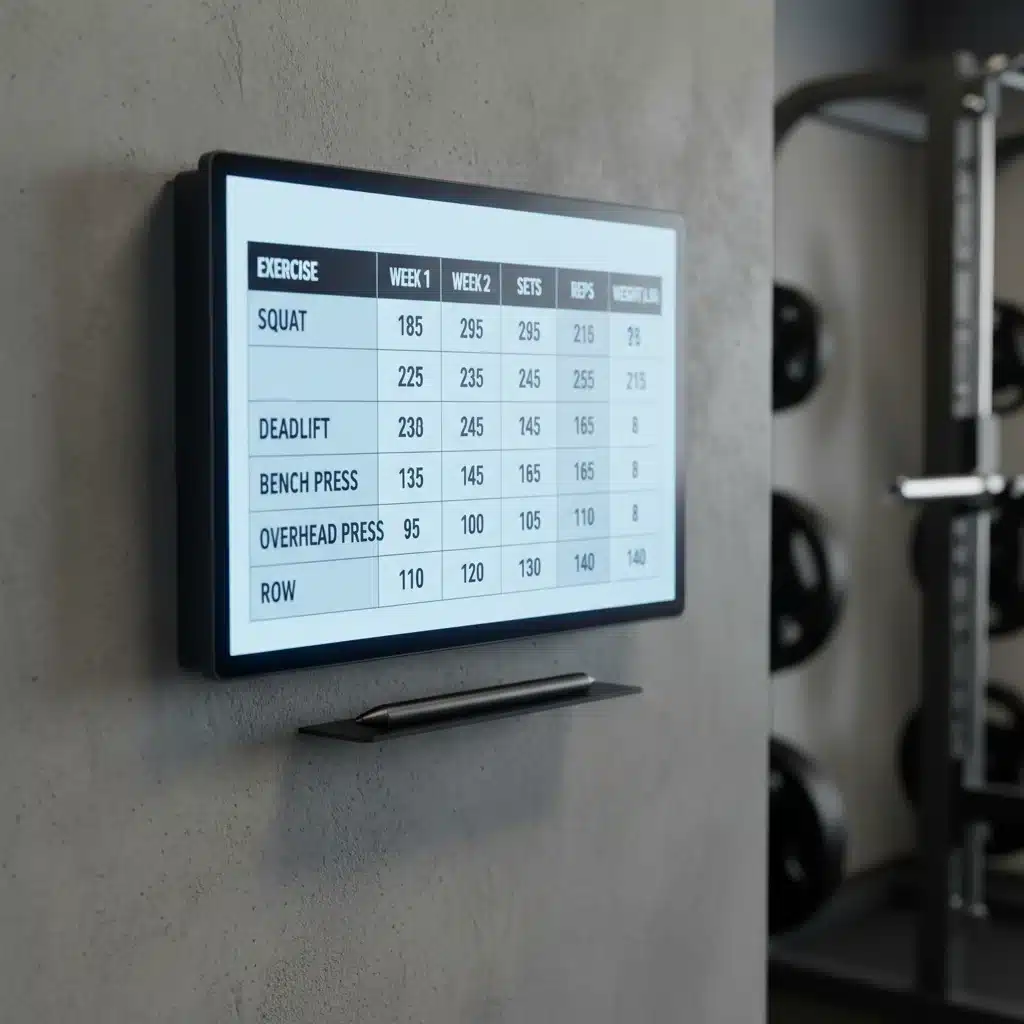
Before you can progress, you need to know where you’re starting. For every exercise, record the weight, sets, and reps you perform. A simple notebook, a fitness app, or a spreadsheet will suffice. This data is invaluable for tracking your progress and understanding when and how to apply progressive overload. Without tracking, you’re essentially training blind. This is the non-negotiable first step for anyone who wants progressive overload explained and applied effectively.
2. Focus on Perfect Form First
Never sacrifice form for weight. Lifting too heavy with poor technique is a fast track to injury and ineffective muscle stimulation. Master the movement pattern with a lighter weight before attempting to progressively overload. Once your form is solid, then you can confidently increase the challenge.
3. Choose Your Primary Overload Method
For beginners and intermediate lifters, increasing weight or reps are often the most effective and easiest methods to implement. As you become more advanced, you can start experimenting with other methods like decreasing rest times or increasing time under tension. Don’t try to use all methods at once; pick one or two for a given training cycle.
4. Make Small, Consistent Increments
The operative word in progressive overload is ‘progressive.’ This means gradual, small increases. Don’t try to add 20 lbs to your squat in one week. Instead, aim for 2.5 lbs or 5 lbs. For reps, try to get one or two more reps per set. These small increments add up significantly over weeks and months, leading to substantial gains.
5. Listen to Your Body and Prioritize Recovery
Progressive overload is demanding. Your body needs adequate rest, nutrition, and sleep to recover and adapt. Pushing too hard too often without sufficient recovery will lead to overtraining, stagnation, and increased risk of injury. If you’re consistently sore, fatigued, or seeing performance drops, it might be a sign to back off, take a deload, or re-evaluate your recovery strategies. Progressive overload explained also means understanding your body’s limits.
6. Periodize Your Training
You can’t continually increase weight or reps indefinitely. Eventually, you’ll hit a point where you can’t progress linearly. This is where periodization comes in. Periodization involves structuring your training into different phases, with varying intensities and volumes, followed by periods of reduced load (deloads) to allow for full recovery and supercompensation. This cyclical approach helps prevent plateaus and keeps you progressing long-term.
7. Be Patient and Consistent
Muscle and strength gains don’t happen overnight. Progressive overload is a long-term strategy that requires patience and unwavering consistency. Stick to your program, trust the process, and celebrate the small victories along the way. Over time, these small, consistent efforts will yield remarkable results.
Common Mistakes to Avoid When Implementing Progressive Overload
While the concept of progressive overload is straightforward, its application can be fraught with common pitfalls. Avoiding these mistakes is crucial for maximizing your gains and staying injury-free.
1. Sacrificing Form for Weight
This is arguably the most common and damaging mistake. Many people ego-lift, adding weight they can’t handle with proper form. This not only increases the risk of injury but also reduces the effectiveness of the exercise, as other muscle groups or momentum often take over, rather than the target muscles. Always prioritize perfect form over heavier weight. If you’re going to progressively overload, do it correctly.
2. Not Tracking Progress
As mentioned earlier, if you’re not tracking your workouts, you have no objective way to know if you’re progressively overloading. You’re relying on memory, which is notoriously unreliable. Consistent tracking allows you to see tangible progress and make informed decisions about when and how to increase the challenge.
3. Increasing Load Too Quickly
While the goal is to increase the challenge, doing so too rapidly can lead to burnout, overtraining, and injury. Your body needs time to adapt to new demands. Small, incremental increases are much safer and more sustainable than large jumps.
4. Neglecting Other Overload Methods
Sticking solely to increasing weight can lead to plateaus when you can no longer add more load. By exploring other methods like increasing reps, sets, decreasing rest, or increasing TUT, you provide new stimuli for growth and keep your training fresh and effective. A holistic progressive overload explained approach uses multiple methods.
5. Ignoring Recovery
Progressive overload creates stress. Without adequate recovery (sleep, nutrition, rest days), your body cannot repair and adapt. This leads to chronic fatigue, decreased performance, and an increased risk of injury. Recovery is just as important as the training itself.
6. Lack of Consistency
Progressive overload is a cumulative process. Skipping workouts frequently or constantly changing your program won’t allow your body enough time to adapt to a consistent stimulus. Stick to a well-structured program for several weeks or months to see the benefits.
7. Not Deloading
Constantly pushing for more without periodic breaks or reduced intensity (deloads) will eventually lead to overtraining and mental burnout. Deloads are crucial for allowing your body to fully recover, dissipate accumulated fatigue, and come back stronger. They are an integral part of long-term progressive overload.
Advanced Strategies for Continued Progressive Overload in 2026
Once you’ve mastered the basics of progressive overload, you might find that linear progression becomes increasingly difficult. This is where advanced strategies come into play, allowing you to continue making gains even as an experienced lifter.
1. Double Progression
This method involves progressing both reps and weight. You choose a rep range (e.g., 8-12 reps). Once you can perform the top end of the rep range (12 reps) for all your sets with a given weight, you then increase the weight and drop back down to the lower end of the rep range (8 reps) with the new, heavier weight. This is a highly effective and structured way to implement progressive overload explained for sustained growth.
2. Rep Ranging
Instead of sticking to a fixed number of reps, work within a rep range (e.g., 6-8 reps, 8-12 reps). Once you can hit the top end of the rep range for all sets, increase the weight and aim for the lower end of the new, heavier rep range.
3. Reverse Pyramid Training (RPT)
In RPT, you start with your heaviest set for fewer reps, then decrease the weight for subsequent sets while increasing the reps. This allows you to progressively overload with higher intensity early in your workout when you’re freshest.
4. Drop Sets and Supersets
These techniques increase training density and volume. Drop sets involve performing an exercise to failure, then immediately dropping the weight and continuing for more reps. Supersets involve performing two exercises back-to-back with no rest in between. While not direct progressive overload in terms of increasing weight, they significantly increase the metabolic stress and total work in a given time.
5. Rest-Pause Training
Perform a set to failure, rest for a very short period (e.g., 10-20 seconds), then perform a few more reps with the same weight. Repeat this process for multiple mini-sets within one ‘set.’ This allows you to accumulate more reps with a heavy weight, increasing total volume and intensity.
6. Cluster Sets
Similar to rest-pause, but with planned intra-set rest periods. For example, instead of doing 5 reps continuously, you might do 2 reps, rest 10 seconds, 2 reps, rest 10 seconds, 1 rep. This allows you to lift heavier weights for more total reps than you might otherwise be able to do in a single continuous set.
7. Manipulating Tempo
As discussed earlier, increasing time under tension by controlling the eccentric and concentric phases of a lift can provide a new stimulus without adding more weight. This is particularly effective for hypertrophy.
8. Incorporating Negatives/Eccentrics
The eccentric (lowering) phase of a lift is where muscles can typically handle more load and experience more damage (which can lead to growth). Incorporating forced negatives (where a spotter helps you lift the weight, but you control the lowering phase) can be a powerful progressive overload tool.
These advanced methods require a solid understanding of your body and proper technique. They should be integrated thoughtfully into your program, often in conjunction with periodization, to prevent overtraining and ensure continued progress. The core principle of progressive overload explained remains, but the methods evolve as you do.
The Role of Nutrition and Recovery in Progressive Overload
It’s impossible to talk about progressive overload without emphasizing the critical roles of nutrition and recovery. Think of your body as a construction site. Progressive overload is the blueprint that dictates what needs to be built (stronger, bigger muscles). Nutrition provides the raw materials (protein, carbohydrates, fats, vitamins, minerals), and recovery is the time and environment needed for the construction to actually happen.
Nutrition: Fueling Your Progress
- Protein: Essential for muscle repair and growth. Aim for 1.6-2.2 grams of protein per kilogram of body weight daily.
- Carbohydrates: Your primary energy source for intense workouts and replenishing glycogen stores. Don’t fear carbs; they fuel your performance.
- Fats: Important for hormone production and overall health. Include healthy fats in your diet.
- Caloric Surplus: To build muscle, you generally need to be in a slight caloric surplus, meaning you consume more calories than you burn. This provides the energy necessary for adaptation and growth.
Recovery: The Unsung Hero
- Sleep: This is non-negotiable. Aim for 7-9 hours of quality sleep per night. During sleep, your body releases growth hormone and repairs tissues.
- Rest Days: Don’t train every single day. Incorporate active recovery (light cardio, stretching) or complete rest days into your weekly schedule.
- Stress Management: Chronic stress elevates cortisol levels, which can hinder muscle growth and recovery. Find ways to manage stress effectively.
- Hydration: Staying well-hydrated is crucial for all bodily functions, including nutrient transport and muscle performance.
Neglecting nutrition and recovery is like trying to build a skyscraper without enough steel or concrete, or without giving the workers enough time to do their job. You might have the best progressive overload program in the world, but without these foundational elements, your progress will be severely limited. For progressive overload explained in its entirety, these components are just as vital as the training itself.
Conclusion: Embrace Progressive Overload for Lifelong Gains
Progressive overload is not just a training principle; it’s a philosophy for continuous improvement in your fitness journey. It’s the scientific backbone of all effective strength and muscle-building programs. By consistently challenging your body in a structured and safe manner, you compel it to adapt, grow, and become stronger. This guide has provided you with a thorough understanding of progressive overload explained, its various methods, practical application, and crucial considerations for safety and long-term success.
Remember that the journey of fitness is a marathon, not a sprint. There will be weeks where progress feels slow, and others where you might even need to deload. But by adhering to the principles of progressive overload, diligently tracking your progress, prioritizing perfect form, and supporting your efforts with optimal nutrition and recovery, you will build a foundation for lifelong strength and muscle development. In 2026 and beyond, make progressive overload the cornerstone of your training, and watch as you consistently break through plateaus and achieve new levels of physical prowess. Embrace the challenge, enjoy the process, and celebrate every small victory on your path to a stronger, more capable you.