Optimal Fitness: 7 Hydration Strategies for Summer 2026
Optimizing hydration is essential for maintaining peak physical performance and overall health, particularly during the hot summer months, by preventing dehydration and supporting vital bodily functions.
As summer 2026 approaches, the importance of proper hydration for anyone pursuing fitness goals becomes undeniable. Implementing Practical Solutions: 7 Hydration Strategies for Optimal Fitness in Summer 2026 is not just about quenching thirst; it’s about safeguarding performance, accelerating recovery, and ensuring overall well-being.
Understanding the Basics of Hydration for Fitness
Before diving into specific strategies, it’s vital to grasp why hydration is so critical for physical activity. Water plays a pivotal role in numerous bodily functions, including regulating body temperature, lubricating joints, transporting nutrients, and even impacting cognitive function. During exercise, especially in warm weather, the body loses significant amounts of fluid through sweat, which, if not replenished, can quickly lead to dehydration.
Dehydration, even mild, can severely impair physical performance. It can cause fatigue, reduce endurance, decrease strength, and increase the risk of heat-related illnesses. Understanding these fundamental principles sets the stage for adopting effective hydration habits.
The Role of Electrolytes
While water is paramount, electrolytes are equally important, particularly during intense or prolonged workouts. Electrolytes like sodium, potassium, and magnesium help maintain fluid balance, nerve function, and muscle contractions. Losing these through sweat without replacement can lead to imbalances, muscle cramps, and further performance degradation.
- Sodium: Crucial for maintaining fluid balance and preventing hyponatremia.
- Potassium: Essential for muscle function and heart health.
- Magnesium: Supports muscle and nerve function, blood sugar control, and blood pressure regulation.
Incorporating electrolyte-rich foods or drinks can be a game-changer for those pushing their limits in the summer heat. This foundational knowledge empowers fitness enthusiasts to make informed choices about their hydration.
Strategy 1: Proactive Hydration Planning
Effective hydration begins long before your workout starts. Proactive hydration planning involves consciously increasing your fluid intake throughout the day, not just when you feel thirsty. Thirst is often a sign that your body is already partially dehydrated, so staying ahead of it is key.
Start your day with a large glass of water and continue to sip fluids consistently. Consider carrying a reusable water bottle with you everywhere to serve as a constant reminder. This consistent intake helps maintain optimal fluid levels, ensuring your body is prepared for any physical demands.
Monitoring Urine Color
A simple yet highly effective way to gauge your hydration status is by observing the color of your urine. Light yellow or straw-colored urine generally indicates good hydration, while dark yellow or amber urine suggests you need to drink more fluids. This visual cue provides immediate feedback and empowers you to adjust your intake as needed.
- Clear or very pale yellow: Excellent hydration.
- Light yellow: Well-hydrated.
- Dark yellow: Mildly dehydrated, increase fluid intake.
- Amber or darker: Significantly dehydrated, seek fluids immediately.
By making hydration a conscious, ongoing effort, you build a strong foundation for managing your fluid levels effectively, especially when engaging in strenuous activities during the summer months.
Strategy 2: Incorporating Hydrating Foods
Hydration isn’t solely about drinking water; a significant portion of our daily fluid intake can come from the foods we eat. Many fruits and vegetables are packed with water, alongside essential vitamins, minerals, and electrolytes. Integrating these into your summer diet can significantly boost your overall hydration.
Think beyond just plain water and consider a diet rich in water-dense produce. This approach not only helps you stay hydrated but also provides valuable nutrients that support your fitness goals and overall health.
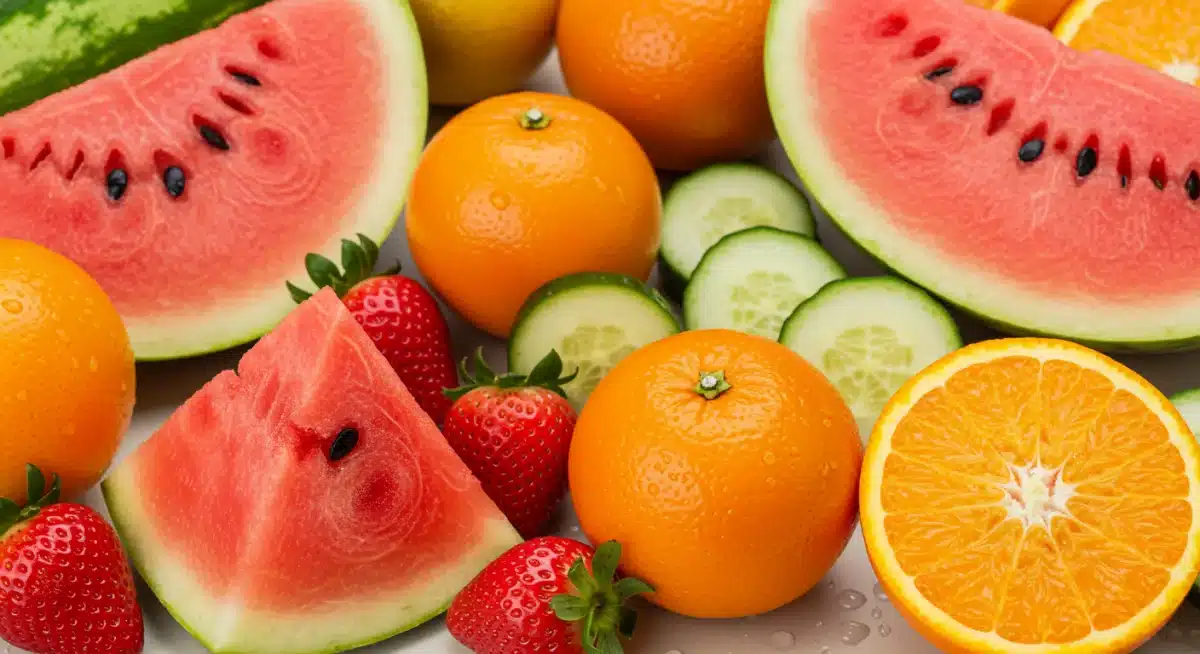
Some excellent choices include watermelon, cucumbers, strawberries, cantaloupe, oranges, and lettuce. These foods offer a refreshing way to replenish fluids and electrolytes naturally. For instance, watermelon is about 92% water and also provides electrolytes like potassium.
Creative Culinary Hydration
Beyond simply eating them raw, you can get creative with how you incorporate hydrating foods into your meals. Smoothies, fresh juices, and salads are fantastic ways to enjoy these benefits. Consider making fruit-infused water with slices of cucumber, lemon, or berries for an extra flavor boost that encourages more drinking.
- Watermelon salad: A refreshing blend of watermelon, feta, and mint.
- Cucumber and mint infused water: A simple, invigorating drink.
- Berry smoothies: Packed with antioxidants and hydrating fluids.
By diversifying your hydration sources to include a variety of water-rich foods, you can enhance your fluid intake in a delicious and nutritious way, making it easier to meet your daily hydration needs.
Strategy 3: Optimizing Fluid Intake During Exercise
Maintaining proper hydration during exercise is paramount to sustain performance and prevent overheating. The intensity and duration of your workout, coupled with environmental factors like temperature and humidity, will dictate your fluid needs. It’s not a one-size-fits-all approach; listening to your body and planning accordingly are crucial.
For workouts lasting less than an hour, plain water is generally sufficient. However, for longer or more intense sessions, especially in the heat, sports drinks containing electrolytes and carbohydrates become beneficial. They help replenish lost salts and provide energy to muscles.
Personalized Hydration Rates
To determine your personal hydration rate, try weighing yourself before and after a typical workout session. The difference in weight (after accounting for fluid intake during exercise) represents the fluid lost through sweat. Approximately 1 liter of fluid weighs 1 kilogram (or 2.2 pounds). Aim to replace 125-150% of the fluid lost within a few hours post-exercise.
Developing a personalized hydration plan based on your sweat rate ensures you drink enough without over-hydrating. This strategy is particularly effective for athletes and individuals engaging in prolonged physical activity.
- Before exercise: Drink 16-20 ounces (around 500-600 ml) 2-3 hours prior.
- During exercise: Sip 4-8 ounces (around 120-240 ml) every 15-20 minutes.
- After exercise: Replenish 16-24 ounces (around 500-700 ml) for every pound of body weight lost.
By carefully managing your fluid intake before, during, and after your workouts, you can significantly mitigate the risks of dehydration and optimize your physical output and recovery.
Strategy 4: The Role of Electrolyte Replacement
As mentioned earlier, electrolytes are vital for various bodily functions, and their loss through sweat can lead to serious issues. For anyone engaged in regular fitness activities, especially during the summer, understanding and implementing effective electrolyte replacement is a cornerstone of optimal hydration.
Simply drinking water might not be enough to restore the balance of essential minerals lost. This is where targeted electrolyte replacement comes into play, ensuring your body can continue to perform at its best.
Choosing the Right Electrolyte Source
The market is flooded with electrolyte products, from sports drinks to powders and tablets. Not all are created equal, and the best choice depends on your specific needs. For moderate workouts, a balanced diet rich in fruits and vegetables might suffice. For more intense or longer sessions, a commercial sports drink with a good balance of sodium, potassium, and carbohydrates can be beneficial.
Be wary of drinks high in sugar, as these can sometimes cause stomach upset and don’t always provide the ideal electrolyte balance. Look for options with a moderate carbohydrate content (around 6-8%) to aid absorption and provide energy.
- Sports drinks: Good for extended workouts (over 60 minutes) or high-intensity exercise.
- Electrolyte tablets/powders: Convenient for adding to water, often sugar-free.
- Natural sources: Coconut water, fruit juices, and certain vegetables provide natural electrolytes.
Prioritizing electrolyte replacement alongside water intake ensures a complete hydration strategy that supports sustained energy, prevents muscle cramps, and aids in faster recovery after physical exertion.
Strategy 5: Avoiding Dehydrating Beverages
While focusing on what to drink, it’s equally important to be mindful of beverages that can contribute to dehydration. Certain drinks, despite being fluids, can have a diuretic effect, leading to increased urine production and ultimately, fluid loss from the body. Understanding which drinks to limit or avoid is crucial for maintaining optimal hydration, especially in warm weather.
The most common culprits are alcoholic beverages and highly caffeinated drinks. While a morning coffee or an evening beer might be part of your routine, their impact on your hydration status needs to be considered.
Moderating Alcohol and Caffeine
Alcohol is a known diuretic, meaning it promotes increased urine output. Consuming alcohol, especially in large quantities, can significantly dehydrate you. If you choose to drink alcohol, moderation is key, and it’s advisable to alternate alcoholic drinks with water to mitigate its dehydrating effects.
Similarly, caffeine, while offering a temporary energy boost, also has diuretic properties. While moderate caffeine intake for regular consumers usually doesn’t lead to significant dehydration, excessive amounts can. It’s best to consume caffeinated beverages in moderation and ensure you’re also drinking plenty of water throughout the day.
- Alcohol: Limit intake, especially before or after strenuous activity.
- High-caffeine drinks: Consume in moderation; balance with water.
- Sugary sodas: Offer little nutritional value and can contribute to energy crashes.
By consciously reducing or balancing your intake of dehydrating beverages, you can ensure that your fluid consumption genuinely contributes to your hydration goals rather than working against them, supporting your fitness journey.
Strategy 6: Utilizing Hydration Tracking Technology
In today’s tech-driven world, numerous tools and apps can help you monitor and manage your hydration levels. Utilizing hydration tracking technology can provide personalized reminders, track your daily intake, and even offer insights into your hydration patterns. This can be particularly useful for those who struggle to remember to drink water consistently.
From smart water bottles to smartphone applications, these tools offer a modern approach to an age-old problem, making hydration management easier and more engaging. They can transform a passive habit into an active, measurable goal.
Apps and Smart Devices
Many smartphone apps are designed specifically for hydration tracking. They allow you to log your water intake, set daily goals, and receive timely reminders. Some even integrate with fitness trackers to account for activity levels and adjust recommendations accordingly. Smart water bottles take this a step further by automatically tracking your intake and glowing to remind you to drink.
These devices can provide valuable data over time, helping you understand how different activities or environmental conditions affect your hydration needs. This data-driven approach allows for more precise and effective hydration planning.
- Hydration apps: Offer reminders, goal setting, and progress tracking.
- Smart water bottles: Automatically track intake and provide visual prompts.
- Wearable tech integration: Some fitness trackers can estimate sweat loss and suggest hydration needs.
Leveraging technology to track your hydration can lead to a more consistent and optimized fluid intake, ensuring you meet your fitness goals with the best possible support from your body’s hydration status.
Strategy 7: Adapting to Environmental Conditions
Summer 2026 presents unique challenges for fitness enthusiasts due to higher temperatures and humidity. Your hydration strategy must be flexible and adaptable to these environmental conditions. What works on a cool day won’t be sufficient on a scorching hot and humid afternoon. Adjusting your fluid intake based on the weather is a critical, often overlooked, aspect of optimal hydration.
High temperatures increase sweat rates, while high humidity can make it harder for sweat to evaporate, reducing the body’s natural cooling mechanism and increasing the risk of overheating. Therefore, a more aggressive hydration approach is needed.
Pre-Cooling and Post-Cooling
Beyond just drinking more, consider strategies to manage your body temperature. Pre-cooling, such as drinking cold water or applying cold towels before intense exercise, can slightly lower core body temperature, potentially delaying the onset of heat stress. Post-cooling strategies, like cold showers or ice baths, can aid recovery and bring your body temperature back to normal more quickly.
Planning your workouts for cooler parts of the day, such as early morning or late evening, is another simple yet effective adaptation. If you must exercise during peak heat, reduce intensity and take frequent breaks in the shade.
- Increase fluid intake: Drink more frequently and in larger volumes in hot, humid conditions.
- Choose appropriate fluids: Opt for electrolyte-rich drinks during extended exposure to heat.
- Wear light clothing: Light-colored, breathable fabrics help regulate body temperature.
By proactively adapting your hydration and overall fitness routine to the prevailing environmental conditions, you can significantly enhance your safety, comfort, and performance throughout the summer months.
| Key Strategy | Brief Description |
|---|---|
| Proactive Hydration | Drink consistently throughout the day, not just when thirsty, using urine color as a guide. |
| Hydrating Foods | Incorporate water-rich fruits and vegetables like watermelon and cucumber into your diet. |
| Electrolyte Balance | Replenish lost electrolytes during intense exercise with sports drinks or natural sources. |
| Environmental Adaptations | Adjust fluid intake and workout times based on temperature and humidity levels. |
Frequently Asked Questions About Summer Hydration
General guidelines suggest around 8 glasses (64 ounces) of water daily, but during summer workouts, this can increase significantly. Aim to drink 16-20 ounces two hours before, 4-8 ounces every 15-20 minutes during, and 16-24 ounces for every pound lost after exercise.
For workouts less than 60 minutes, plain water is usually sufficient. However, for longer, more intense sessions, especially in hot conditions, sports drinks can be beneficial. They help replenish electrolytes and provide carbohydrates for sustained energy, aiding performance and preventing dehydration.
While water-rich foods like fruits and vegetables contribute significantly to hydration, they typically cannot replace all the fluids lost during intense summer workouts. They are an excellent complement to water intake, providing electrolytes and nutrients, but direct water consumption remains crucial for optimal hydration.
Common signs of dehydration include thirst, dry mouth, infrequent urination, dark urine, fatigue, dizziness, and muscle cramps. More severe symptoms can involve confusion, rapid heartbeat, and extreme tiredness. Recognizing these signs early is vital to prevent further complications during summer fitness.
High humidity reduces the body’s ability to cool itself through sweat evaporation, leading to a higher core body temperature and increased sweat production. This means you’ll lose more fluids and electrolytes, necessitating a more aggressive hydration strategy and potentially more frequent breaks during exercise.
Conclusion
Mastering hydration is not just a seasonal concern but a year-round commitment that becomes especially critical during the summer months. By adopting these Practical Solutions: 7 Hydration Strategies for Optimal Fitness in Summer 2026, you equip yourself with the knowledge and tools to maintain peak physical condition, prevent heat-related issues, and ensure a safe, productive fitness journey. Remember, consistent effort, smart choices, and adapting to your body’s needs are the cornerstones of effective hydration.