Advanced Carb Timing for Endurance Athletes: 3-Month Peak Plan

Advanced carbohydrate timing for endurance athletes involves strategically manipulating carbohydrate intake before, during, and after training and competition to optimize fuel availability, enhance recovery, and maximize performance.
For endurance athletes, optimizing nutrition is not merely about eating healthily; it’s a precise science, and few elements are as critical as carbohydrate timing. This guide delves into advanced carbohydrate timing strategies, offering a comprehensive 3-month plan designed to help you achieve peak performance by mastering your fueling.
Understanding the Science of Carbohydrates for Endurance
Carbohydrates are the primary fuel source for high-intensity and prolonged endurance exercise. When we consume carbohydrates, they are broken down into glucose, which is then stored as glycogen in our muscles and liver. These glycogen stores are critical for sustained energy during long training sessions and races.
The body’s capacity to store glycogen is limited, typically providing enough fuel for approximately 90-120 minutes of continuous, moderate-to-high intensity exercise. Depleting these stores leads to ‘hitting the wall,’ a phenomenon all too familiar to endurance athletes. Therefore, strategic carbohydrate intake is not just beneficial but essential for preventing fatigue and maintaining performance.
Glycogen Depletion and Replenishment
During exercise, muscle glycogen is utilized to produce ATP, the energy currency of cells. As exercise continues, liver glycogen also contributes to maintaining blood glucose levels. Once these stores are significantly depleted, the body must rely more heavily on fat oxidation, which is a slower process and less efficient for high-intensity efforts.
- Pre-exercise fueling: Maximizing glycogen stores before activity.
- Intra-exercise fueling: Providing exogenous carbohydrates to spare endogenous glycogen and maintain blood glucose.
- Post-exercise recovery: Rapidly replenishing glycogen stores to prepare for the next session.
The timing and type of carbohydrates consumed directly impact how effectively these processes occur. This foundational understanding underpins all advanced carbohydrate timing strategies, moving beyond simple ‘eat carbs’ advice to a nuanced approach that aligns with physiological demands.
Month 1: Building Foundational Carbohydrate Adaptation
The first month of your advanced carbohydrate timing plan focuses on establishing a robust metabolic foundation. This involves understanding your current carbohydrate tolerance and gradually adapting your body to utilize carbohydrates efficiently during different training phases. It’s about laying the groundwork for more intense strategies.
During this initial phase, the emphasis is on consistency and personalized intake. Athletes should begin by tracking their typical daily carbohydrate intake and correlating it with their training load. This baseline data is crucial for making informed adjustments in subsequent months.
Daily Carbohydrate Targets and Types
For moderate training loads, a general guideline for endurance athletes is 5-7 grams of carbohydrates per kilogram of body weight per day (g/kg/day). However, this needs to be individualized based on training volume, intensity, and personal response.
- Complex carbohydrates: Focus on whole grains, legumes, fruits, and vegetables for sustained energy release.
- Simple carbohydrates: Reserve these for immediate pre-, intra-, and post-exercise fueling.
- Fiber intake: Maintain adequate fiber for gut health, but be mindful of timing around intense training to avoid gastrointestinal distress.
Experiment with different carbohydrate sources to identify what works best for your digestive system and energy levels. Pay attention to how different foods affect your performance and recovery. This month is also an excellent time to fine-tune hydration strategies, as water and electrolytes play a vital role in carbohydrate metabolism.
Month 2: Optimizing Fueling for Peak Training Blocks
As your training intensity and volume increase in the second month, your carbohydrate timing strategies must become more sophisticated. This phase is characterized by higher daily carbohydrate intake, strategic carbohydrate loading, and precise intra-workout fueling to support demanding workouts and promote rapid recovery.
During peak training blocks, the body’s energy demands are at their highest. Failing to meet these demands can lead to underperformance, increased risk of injury, and prolonged recovery times. Therefore, carbohydrate intake needs to be aggressive yet calculated.
Carbohydrate Loading Techniques
Traditional carbohydrate loading involves a depletion phase followed by a high-carbohydrate intake phase. However, modern approaches often favor a more gradual increase in carbohydrates without a severe depletion phase, which can be less stressful on the body.
- 3-day carb load: Gradually increasing carbohydrate intake to 8-10 g/kg/day for 3 days leading up to a key long training session or simulated race.
- 24-hour carb load: For shorter, intense events, consuming 10-12 g/kg/day in the 24 hours prior.
- Glycogen supercompensation: Aim for higher than normal glycogen stores to maximize endurance capacity.
In addition to loading, focus on intra-workout fueling for sessions longer than 60-75 minutes. Aim for 30-60 grams of carbohydrates per hour, primarily from easily digestible sources like gels, sports drinks, or energy chews. This helps maintain blood glucose and spares muscle glycogen, delaying fatigue. Post-workout, prioritize a carbohydrate and protein-rich meal within 30-60 minutes to kickstart glycogen replenishment and muscle repair.
Month 3: Tapering, Race Day, and Recovery Strategies
The final month culminates in fine-tuning your carbohydrate strategy for the taper period, optimizing race day fueling, and establishing effective post-race recovery. This is where precision timing can make the greatest difference in performance and overall race experience.
The taper period, typically 1-3 weeks before a major event, involves a significant reduction in training volume while maintaining intensity. This is a critical time for glycogen supercompensation and ensuring the body is fully rested and fueled for the competition.
Race Day Fueling Protocol
Race day fueling should be meticulously planned and practiced during training. No new foods or supplements should be introduced on race day to avoid unexpected gastrointestinal issues.
- Pre-race meal (3-4 hours prior): High in complex carbohydrates (1-4 g/kg), moderate protein, low in fat and fiber.
- Pre-race snack (1 hour prior): Small, easily digestible carbohydrates (e.g., banana, toast).
- During race: 30-90 grams of carbohydrates per hour, depending on race duration and intensity, from familiar sources.
Immediately post-race, the focus shifts to rapid recovery. Consume 1.0-1.2 g/kg of carbohydrates along with 0.25-0.3 g/kg of protein within 30 minutes to an hour to maximize glycogen resynthesis and muscle repair. Continue to consume carbohydrate-rich meals and snacks for the next 24-48 hours to fully replenish energy stores.
Advanced Techniques: Carbohydrate Periodization and ‘Train Low’
Beyond the standard timing protocols, advanced carbohydrate strategies include periodization and the concept of ‘train low, compete high.’ These techniques aim to enhance metabolic flexibility and optimize specific adaptations in endurance athletes, though they require careful implementation.
Carbohydrate periodization involves strategically varying carbohydrate intake throughout different training cycles to match the demands of specific workouts or phases. This can mean higher carbohydrate days for intense sessions and lower carbohydrate days for recovery or low-intensity work.
The ‘Train Low’ Approach
‘Train low’ refers to intentionally performing certain training sessions with reduced carbohydrate availability. The rationale is to stimulate specific adaptations that improve fat utilization and mitochondrial biogenesis, potentially enhancing endurance capacity.
- Sleep low: Training in the evening, then consuming minimal carbohydrates overnight before an easy morning session.
- Twice-a-day training: Performing a second session with reduced glycogen stores after a high-intensity morning workout.
- Fasted training: Exercising in a fasted state, typically in the morning before breakfast.
While ‘train low’ can offer metabolic benefits, it should be used judiciously and under expert guidance. It can impair high-intensity performance and immune function if overused. The goal is to strategically incorporate these sessions, not to consistently train in a depleted state. The majority of intense training and all competitions should be performed with high carbohydrate availability.
Personalizing Your Plan: Tracking, Adjusting, and Consulting Experts
No two athletes are exactly alike, and what works for one may not work for another. The success of any advanced carbohydrate timing strategy hinges on meticulous tracking, continuous adjustment, and, ideally, collaboration with sports nutrition professionals. This personalization ensures the plan evolves with your unique physiological responses and training demands.
Tracking your intake, training load, performance metrics, and subjective feelings (energy levels, recovery, mood) provides invaluable data. Use a food diary, wearable tech, and training logs to gather this information. This data allows for informed adjustments rather than relying on guesswork.
When to Adjust Your Strategy
Be prepared to modify your plan based on several factors:
- Training changes: Increased intensity or volume requires higher carbohydrate intake.
- Environmental conditions: Hot and humid conditions may increase carbohydrate utilization and fluid needs.
- Travel: Disruptions to routine can impact food availability and digestion.
- Individual response: Listen to your body; if you feel consistently fatigued or experience digestive issues, adjust.
Consulting with a registered dietitian specializing in sports nutrition is highly recommended. They can provide personalized recommendations, help interpret your data, and guide you through complex strategies like ‘train low’ safely and effectively. Their expertise can prevent common pitfalls and optimize your path to peak performance.
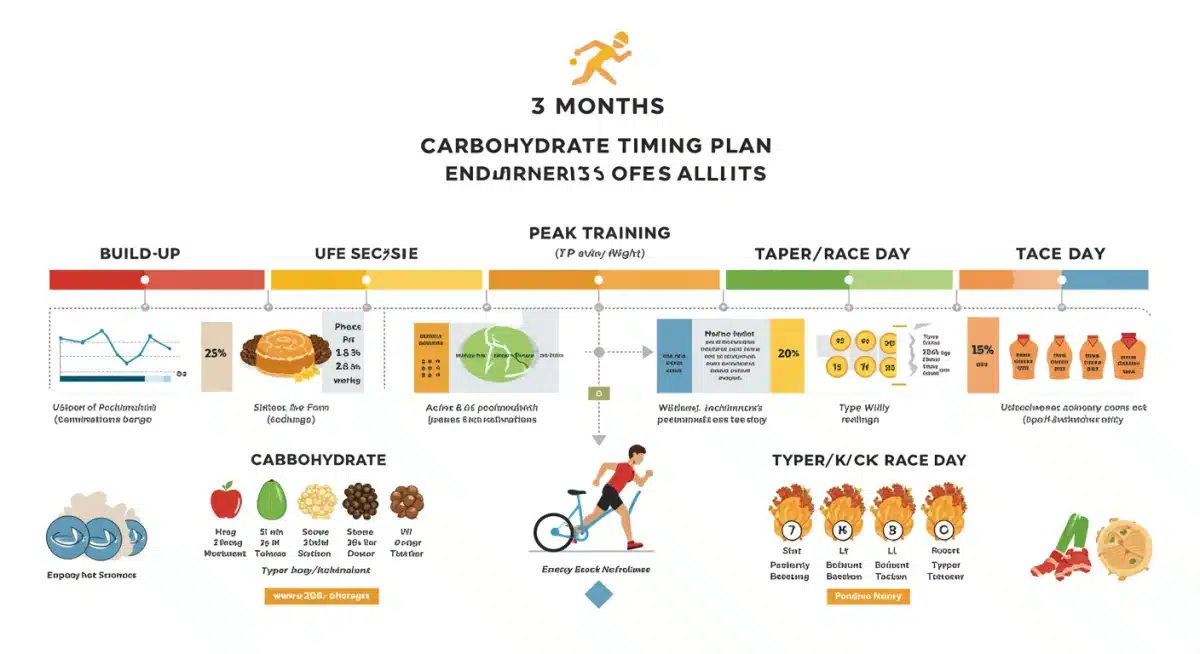
| Key Strategy | Brief Description |
|---|---|
| Month 1: Foundation | Establish baseline carb intake, focus on complex carbs, and track responses to moderate training. |
| Month 2: Peak Training | Implement carb loading, higher daily intake (8-10g/kg/day), and precise intra-workout fueling. |
| Month 3: Race & Recovery | Fine-tune taper fueling, execute race day protocol, and prioritize immediate post-race glycogen replenishment. |
| Train Low Concept | Strategically perform some sessions with reduced carb availability to enhance metabolic adaptations. |
Frequently Asked Questions About Advanced Carbohydrate Timing
The primary goal is to optimize fuel availability, enhance recovery, and ultimately maximize performance by strategically adjusting carbohydrate intake before, during, and after training sessions and competitions.
Advanced strategies often favor a more gradual, less depleting approach to carbohydrate loading. This typically involves increasing carbohydrate intake to 8-10 g/kg/day over 3 days, or even 10-12 g/kg/day for 24 hours prior to an event, avoiding severe depletion phases.
‘Train low’ aims to stimulate metabolic adaptations, such as improved fat utilization and mitochondrial growth, which can enhance endurance capacity. It teaches the body to become more efficient at burning fat as fuel, sparing valuable glycogen stores.
During events lasting over an hour, endurance athletes should aim for 30-90 grams of carbohydrates per hour. The exact amount depends on the duration and intensity of the event, as well as individual tolerance and absorption rates.
Every athlete responds differently to nutritional strategies due to unique metabolic profiles, training loads, and digestive tolerances. Personalization ensures the plan is tailored to individual needs, preventing issues and maximizing effectiveness for optimal results.
Conclusion
Mastering advanced carbohydrate timing is a game-changer for endurance athletes striving for peak performance. This 3-month plan provides a structured yet flexible framework, moving from foundational principles to sophisticated strategies like carbohydrate loading and periodization. By meticulously tracking intake, understanding your body’s responses, and making informed adjustments, you can unlock your full athletic potential. Remember, nutrition is a dynamic science; continuous learning and professional guidance will be your greatest allies on the path to sustained excellence.