Amino Acid Ratios: New Insights for Strength Gains in 2025
Emerging research in 2025 highlights the critical role of specific amino acid ratios, not just total protein intake, in maximizing protein synthesis and accelerating strength gains for athletes and fitness enthusiasts.
Understanding how our bodies build muscle has always been a cornerstone of fitness and nutrition. In 2025, the conversation around strength gains is evolving beyond mere protein quantity to the nuanced importance of specific amino acid ratios. This article delves into the cutting-edge findings that are reshaping our approach to protein synthesis for optimal muscle development.
The evolving landscape of protein synthesis
For decades, the mantra for muscle growth was simply to consume enough protein. While adequate protein intake remains foundational, new scientific discoveries are revealing a more intricate picture. Researchers are now focusing on the precise balance and timing of amino acids, the building blocks of protein, to unlock superior anabolic responses.
This shift in understanding is driven by advanced analytical techniques and a deeper comprehension of cellular signaling pathways. We’re moving from a broad-brush approach to a highly specific, personalized strategy for maximizing muscle protein synthesis (MPS).
Beyond the basics: what is protein synthesis?
Protein synthesis is the biological process by which individual cells build their specific proteins. It’s a complex cascade of events involving DNA, RNA, and various enzymes, ultimately leading to the creation of new muscle tissue. For strength athletes, optimizing this process is paramount.
- Transcription: DNA’s genetic information is copied into messenger RNA (mRNA).
- Translation: mRNA is decoded by ribosomes to produce a specific amino acid sequence.
- Folding: The amino acid chain folds into a functional protein structure.
- Muscle Repair: New proteins are used to repair damaged muscle fibers post-exercise.
The efficiency of these steps can be significantly influenced by the availability and proportion of amino acids. Our understanding of these intricate mechanisms is continuously expanding, leading to more targeted nutritional strategies.
The traditional view often overlooked the subtle yet powerful impact that specific amino acid combinations could have. Now, the emphasis is on creating an optimal internal environment, not just providing raw materials, to facilitate robust muscle growth and recovery.
The pivotal role of essential amino acids (EAAs)
Essential amino acids (EAAs) are those our bodies cannot produce, meaning they must be obtained through diet. Among them, the branched-chain amino acids (BCAAs) – leucine, isoleucine, and valine – have long been highlighted for their role in MPS. However, recent research suggests that a complete EAA profile, with specific ratios, is even more critical.
A deficiency in even one EAA can hinder the entire protein synthesis process, much like a missing piece in a complex puzzle. This underscores the importance of consuming high-quality protein sources that provide all EAAs in adequate amounts.
Leucine: the anabolic trigger re-evaluated
Leucine has been recognized as the primary anabolic signal, directly activating the mTOR pathway, which is crucial for muscle growth. While its importance remains, new studies in 2025 are refining our understanding of its optimal concentration relative to other EAAs.
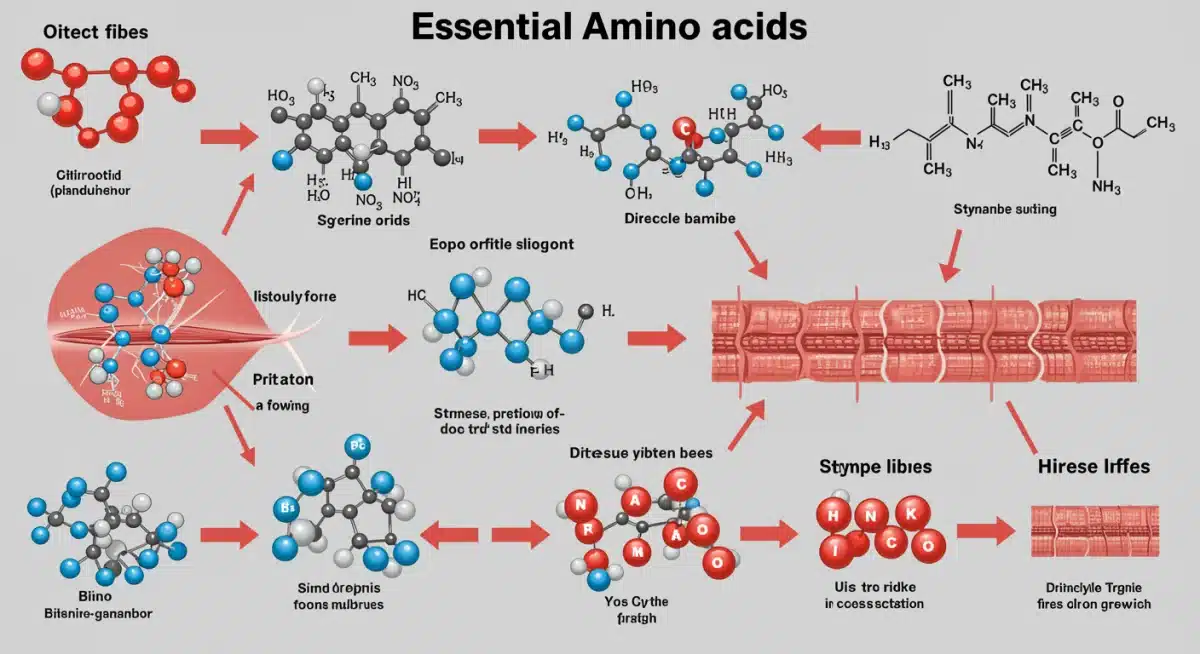

It’s not just about consuming high amounts of leucine; it’s about consuming it within a balanced EAA matrix. An excessive focus on isolated leucine might not yield the same benefits as a comprehensive EAA blend, as other EAAs are required for the actual construction of new proteins.
- mTOR Pathway Activation: Leucine directly stimulates this pathway, initiating MPS.
- Synergistic Effects: Other EAAs provide the necessary building blocks once mTOR is activated.
- Timing is Key: Leucine’s impact is greatest when consumed around resistance training.
- Dosage Refinement: Optimal leucine intake is being re-evaluated for different populations.
These findings suggest that while leucine is a powerful initiator, it operates best as part of a well-orchestrated team of amino acids. Focusing solely on leucine could be akin to having a powerful engine without the rest of the car’s components.
Optimizing amino acid ratios for superior strength gains
The exciting frontier in 2025 is the identification of optimal amino acid ratios. This isn’t a one-size-fits-all solution; ratios may vary based on individual factors like age, training intensity, and specific fitness goals. However, general principles are emerging that can guide supplementation and dietary choices.
Research now suggests that a slightly higher proportion of certain EAAs, beyond just BCAAs, can create a more sustained and robust anabolic environment. This fine-tuning of ratios aims to maximize the efficiency of protein synthesis, leading to faster recovery and greater strength adaptations.
The methionine and lysine connection
Beyond leucine, methionine and lysine are gaining significant attention. These EAAs play crucial roles in various metabolic pathways that support muscle health and growth. New research indicates that specific ratios involving these amino acids can enhance the utilization of other protein components.
For instance, methionine is a precursor to creatine, a compound vital for energy production during high-intensity exercise. Lysine is involved in calcium absorption and collagen formation, both important for connective tissue health, which is crucial for supporting heavy lifting.
- Methionine: Crucial for creatine synthesis and antioxidant defense.
- Lysine: Supports calcium absorption and collagen cross-linking for tissue integrity.
- Balanced Intake: Both are essential for a complete anabolic response.
- Dietary Sources: Found in meat, fish, eggs, and some legumes.
Understanding the interplay between these less-talked-about EAAs and the more prominent ones like leucine is key to developing truly optimized nutritional strategies for strength athletes.
Timing and distribution: maximizing absorption and utilization
It’s not just what you eat, but when and how you eat it. The timing and distribution of protein intake, particularly essential amino acids, are critical factors in optimizing MPS. New evidence in 2025 is refining these recommendations, moving beyond the traditional post-workout protein shake.
While the post-exercise window remains important, studies suggest that spreading protein intake throughout the day, with strategic EAA-rich meals or supplements, can sustain higher rates of MPS. This ‘pulsing’ approach ensures a continuous supply of building blocks for muscle repair and growth.
Pre-sleep protein: an overlooked opportunity
Consuming casein protein or a slow-digesting EAA blend before sleep has shown promise in promoting overnight muscle recovery and growth. This strategy provides a sustained release of amino acids, supporting MPS during a prolonged fasting period.
The body is constantly undergoing protein turnover, even during sleep. Providing a steady stream of amino acids during this crucial recovery phase can significantly enhance the net protein balance, leading to greater gains over time. This approach is particularly beneficial for individuals with high training volumes.
- Sustained Release: Casein protein provides a slow, steady supply of amino acids.
- Overnight Recovery: Supports MPS during sleep, when repair processes are active.
- Improved Net Balance: Helps shift the body into a more anabolic state.
- Practical Application: A protein shake or cottage cheese before bed.
Integrating pre-sleep protein into a comprehensive nutrition plan can offer an additional edge in maximizing strength and muscle gains, capitalizing on the body’s natural restorative processes.
Individualized approaches: tailoring amino acid intake
The future of nutrition science is increasingly personalized. While general guidelines for amino acid ratios are emerging, individual responses to dietary interventions can vary significantly. Factors such as genetics, age, sex, training status, and gut microbiome composition all play a role in how effectively the body utilizes amino acids.
In 2025, advanced diagnostics, including genetic testing and metabolic profiling, are becoming more accessible. These tools can provide insights into an individual’s unique amino acid requirements and metabolic pathways, allowing for highly tailored nutritional strategies.
Age-related considerations
As individuals age, they often experience anabolic resistance, meaning their muscles become less responsive to anabolic stimuli, including amino acid intake. For older adults, slightly higher protein intake and potentially altered amino acid ratios, particularly increased leucine, may be necessary to overcome this resistance and maintain muscle mass.
This highlights the dynamic nature of nutritional requirements across the lifespan. What works for a young, highly trained athlete might not be optimal for an older adult aiming to prevent sarcopenia.
- Anabolic Resistance: Older adults may need more protein and specific amino acids.
- Leucine Threshold: A higher leucine threshold may be required to stimulate MPS in seniors.
- Dietary Adjustments: Focus on nutrient-dense, EAA-rich protein sources.
- Supplementation: Targeted EAA or leucine supplementation might be beneficial.
Personalized nutrition, informed by both general scientific principles and individual biological markers, represents the cutting edge of optimizing amino acid intake for diverse populations.
Practical applications for athletes and fitness enthusiasts
Translating these scientific findings into actionable advice is crucial for anyone looking to maximize their strength gains. The focus shifts from simply counting grams of protein to strategically selecting protein sources and, where appropriate, using targeted supplementation to achieve optimal amino acid ratios.
Prioritizing whole, unprocessed protein sources remains paramount. However, for those with high training demands or specific dietary restrictions, understanding how to intelligently supplement with EAAs can provide a significant advantage in recovery and muscle development.
Dietary strategies for optimal ratios
Incorporating a variety of high-quality protein sources throughout the day is the most effective way to ensure a complete and balanced amino acid profile. Animal proteins like meat, poultry, fish, and dairy are excellent sources of all EAAs.
For plant-based individuals, combining different plant protein sources, such as legumes with grains, can create a complete EAA profile. Understanding the complementary nature of plant proteins is key to achieving optimal ratios without relying on animal products.
- Diverse Protein Sources: Consume a mix of animal and/or complementary plant proteins.
- Meal Spacing: Distribute protein intake evenly across meals and snacks.
- Consider Supplements: EAA or BCAA supplements can fill gaps, especially around workouts.
- Hydration and Micronutrients: Support overall metabolic function for amino acid utilization.
Ultimately, a holistic approach that combines intelligent dietary choices, strategic timing, and, if needed, targeted supplementation based on individual needs, will yield the best results for strength gains.
The future of protein synthesis research
The field of nutrition science is dynamic, with new discoveries constantly refining our understanding. As we look beyond 2025, research will likely continue to delve deeper into the genetic and microbial factors influencing amino acid metabolism. The interaction between our gut microbiome and amino acid utilization is a particularly exciting area of investigation.
Further studies will also explore the long-term effects of optimized amino acid ratios on not just muscle mass and strength, but also overall health, longevity, and disease prevention. The potential for personalized nutrition to revolutionize health outcomes is immense.
AI and predictive modeling
Artificial intelligence and machine learning are poised to play a significant role in future protein synthesis research. By analyzing vast datasets of genetic information, dietary intake, and performance metrics, AI can identify subtle patterns and predict optimal amino acid ratios for individuals with unprecedented accuracy.
This predictive modeling could lead to highly sophisticated, personalized nutrition plans that evolve with an individual’s training progression and physiological changes, moving far beyond current generalized recommendations.
- Genomic Nutrition: Tailoring intake based on individual genetic predispositions.
- Microbiome Influence: Understanding how gut bacteria impact amino acid absorption.
- Bio-feedback Systems: Real-time monitoring to adjust amino acid intake for peak performance.
- Personalized Supplements: Custom-blended amino acid formulas based on individual needs.
The journey to fully understand and harness the power of amino acids for strength gains is ongoing, promising exciting advancements that will empower individuals to achieve their fitness goals more effectively and efficiently.
| Key Aspect | Brief Description |
|---|---|
| Amino Acid Ratios | Beyond total protein, specific EAA ratios are crucial for maximizing muscle protein synthesis and strength. |
| Leucine’s Role | While anabolic, leucine performs optimally within a complete EAA profile, not in isolation. |
| Timing & Distribution | Spreading EAA-rich protein intake throughout the day, including pre-sleep, sustains MPS. |
| Personalized Nutrition | Individual factors like genetics and age influence optimal amino acid requirements. |
Frequently asked questions about amino acid ratios
Recent research in 2025 emphasizes that specific ratios of essential amino acids (EAAs), rather than just total protein, are critical for optimizing muscle protein synthesis (MPS) and accelerating strength gains. This involves a balanced intake of all EAAs, not just focusing on leucine in isolation.
While leucine triggers the MPS pathway, all EAAs are necessary building blocks for new muscle tissue. A deficiency in any single EAA can limit the entire protein synthesis process, making a complete and balanced EAA profile essential for effective muscle repair and growth.
Strategic timing, such as spreading EAA-rich protein intake throughout the day and consuming a slow-digesting protein before sleep, helps maintain a consistent supply of amino acids. This sustained availability optimizes MPS, leading to better recovery and muscle adaptations over time.
Yes, older adults often experience anabolic resistance, requiring higher protein intake and potentially altered amino acid ratios, particularly more leucine, to effectively stimulate muscle protein synthesis. Personalized approaches are crucial to combat age-related muscle loss and maintain strength.
Absolutely. By combining various plant protein sources, such as legumes with grains, plant-based diets can provide a complete and balanced essential amino acid profile. Understanding protein complementarity is key to achieving optimal ratios without relying on animal products.
Conclusion
The journey to enhanced strength and muscle growth is becoming increasingly sophisticated. In 2025, the focus has expanded beyond simply consuming enough protein to strategically understanding and applying optimal amino acid ratios. This nuanced approach, backed by cutting-edge research, emphasizes the synergistic effects of all essential amino acids, refined timing strategies, and personalized dietary interventions. By embracing these advanced insights, athletes and fitness enthusiasts can unlock new levels of performance, recovery, and muscle development, moving closer to their full physiological potential.