Meal Plan for Energy: Save $50 Monthly in 2025
Crafting an effective 7-day meal plan can significantly boost energy levels and save approximately $50 monthly in 2025 by optimizing grocery choices and reducing food waste.
Are you ready to transform your approach to eating, boost your energy, and simultaneously save money in 2025? Our 7-day meal plan is designed to help you achieve these goals, offering practical strategies and expert insights for a healthier, more economical lifestyle. This comprehensive guide will walk you through the process of creating a sustainable meal plan that prioritizes both your well-being and your wallet.
Understanding the Power of a 7-Day Meal Plan
A well-structured 7-day meal plan goes beyond simply deciding what to eat; it’s a strategic tool for managing your nutrition, time, and finances. By mapping out your meals for an entire week, you gain control over your dietary intake, ensuring a balanced consumption of macronutrients and micronutrients essential for sustained energy. This proactive approach minimizes impulsive food choices, which often lead to less healthy options and increased spending.
Moreover, the discipline of a weekly meal plan fosters a deeper understanding of your eating habits and nutritional needs. It allows for intentional incorporation of energy-boosting foods while consciously avoiding those that might lead to energy crashes. The benefits extend to reducing food waste, as you purchase only what you need and utilize ingredients efficiently across multiple meals.
The foundational benefits of weekly planning
- Enhanced Nutritional Intake: Ensures a balanced diet with a variety of vitamins and minerals.
- Consistent Energy Levels: Prevents dips and spikes from erratic eating patterns.
- Reduced Stress: Eliminates daily dilemmas about what to cook or eat.
- Time Efficiency: Consolidates grocery shopping and cooking tasks.
Ultimately, embracing a 7-day meal plan is about making a conscious decision to invest in your health and financial future. It’s a commitment to thoughtful consumption, leading to tangible improvements in both personal well-being and household economics. The initial effort in planning pays dividends through improved health outcomes and significant monetary savings.
Strategic grocery shopping for maximum savings
Saving money on groceries is a cornerstone of an effective budget-friendly meal plan. It requires a strategic approach that begins long before you step into the supermarket. Understanding sales cycles, utilizing coupons, and focusing on seasonal produce are key tactics that can dramatically reduce your weekly food bill, contributing significantly to your goal of saving $50 monthly.
Start by checking weekly circulars and digital coupons from your preferred stores. Compare prices for staple items and plan your meals around what’s on sale. Bulk purchasing non-perishable goods when they are at their lowest price can also yield substantial savings over time. However, be mindful of expiration dates for perishable items to avoid waste, which negates any initial savings.

Smart shopping techniques to implement
- Create a detailed list: Stick strictly to your list to avoid impulse purchases.
- Shop seasonal produce: Fruits and vegetables in season are usually cheaper and fresher.
- Compare unit prices: Always check the price per ounce or pound to find the best value.
- Cook from scratch: Processed foods are often more expensive and less nutritious.
By integrating these smart shopping techniques into your routine, you transform grocery shopping from a mundane chore into a strategic mission to save. This deliberate approach not only helps you stay within your budget but also encourages healthier eating habits by prioritizing whole, unprocessed foods. The cumulative effect of these small changes will be evident in your monthly savings and enhanced energy levels.
Building a balanced 7-day meal plan for energy
Creating a 7-day meal plan that effectively boosts energy requires a thoughtful combination of lean proteins, complex carbohydrates, healthy fats, and a rich array of fruits and vegetables. The goal is to provide your body with a steady supply of nutrients, avoiding the rapid blood sugar fluctuations that often lead to fatigue. Each meal should be designed to offer sustained energy release, keeping you feeling full and focused throughout the day.
Begin by identifying your dietary preferences and any restrictions. Then, consider a rotational approach to your meals, ensuring variety while still leveraging efficiency. For example, prepare a larger batch of a protein source, like grilled chicken or lentils, that can be incorporated into multiple meals over a few days. This strategy saves time and reduces cooking effort.
Key components of an energy-boosting meal
- Complex Carbohydrates: Whole grains, sweet potatoes, and legumes provide sustained energy.
- Lean Proteins: Chicken, fish, tofu, and beans support muscle repair and satiety.
- Healthy Fats: Avocados, nuts, and olive oil are crucial for brain function and hormone production.
- Abundant Produce: Fruits and vegetables offer essential vitamins, minerals, and fiber.
When planning, think about how different meals can complement each other. For instance, if you have leftover roasted vegetables from dinner, they can be easily added to an omelet for breakfast or a salad for lunch the next day. This interconnectedness in meal planning not only maximizes nutritional value but also streamlines the cooking process, making healthy eating more accessible and enjoyable.
Incorporating budget-friendly, energy-boosting recipes
The intersection of affordability and energy-boosting nutrition is where the true power of this meal plan lies. Many nutritious ingredients are surprisingly inexpensive, especially when purchased strategically. Focus on recipes that utilize staple items that are often on sale or are inherently budget-friendly, such as oats, beans, lentils, eggs, and seasonal vegetables. These ingredients form the backbone of meals that are both satisfying and economical.
One effective strategy is to embrace plant-based meals a few times a week. Legumes and grains are significantly cheaper than most meat products and are packed with fiber and protein, contributing to sustained energy. Simple dishes like lentil soup, bean chili, or vegetable stir-fries can be incredibly flavorful, filling, and cost-effective. Furthermore, cooking larger batches of these meals allows for convenient leftovers, reducing the temptation to buy expensive takeout.
Examples of economical and energizing meals
- Breakfast: Overnight oats with berries and nuts; scrambled eggs with spinach.
- Lunch: Large batch lentil soup with whole-grain bread; chickpea salad sandwiches.
- Dinner: Black bean burgers with sweet potato fries; chicken and vegetable stir-fry.
- Snacks: Apples with peanut butter; hard-boiled eggs; homemade trail mix.
Experimenting with different spices and herbs can elevate simple ingredients, preventing meal fatigue. Don’t underestimate the power of a well-stocked pantry. Having staples like rice, pasta, canned tomatoes, and various spices on hand allows for quick and creative meal preparation without constant trips to the grocery store. This proactive approach to stocking your kitchen is a key element in both saving money and maintaining a consistent energy-boosting diet.
Meal prepping for efficiency and consistency
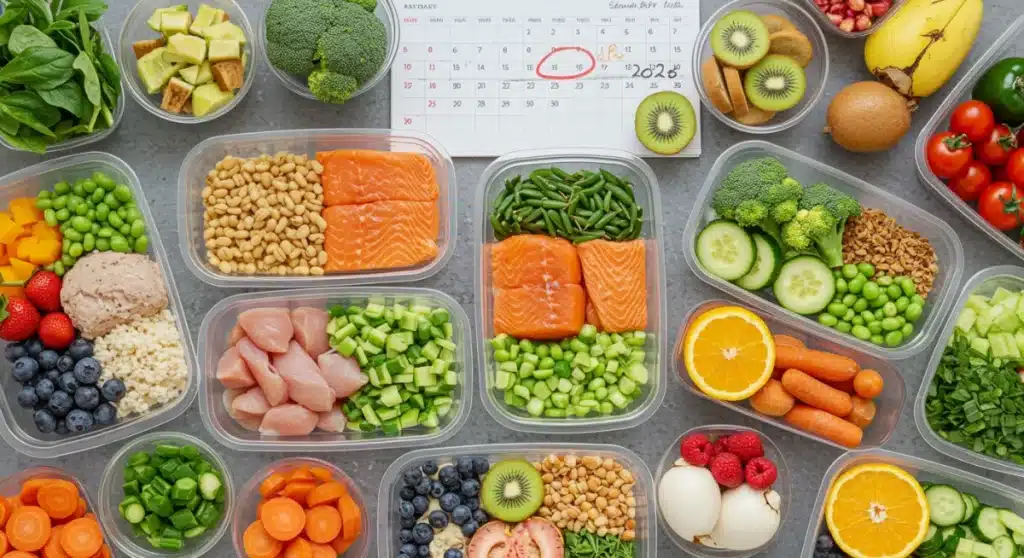
Meal prepping is the practical application of your 7-day meal plan, transforming your theoretical intentions into tangible, ready-to-eat meals. This process involves dedicating a few hours, typically on a weekend, to cook and portion out meals for the upcoming week. The benefits are manifold: it saves significant time during busy weekdays, ensures you always have a healthy option available, and drastically reduces the likelihood of impulsive, unhealthy food choices.
Effective meal prepping involves a systematic approach. Start by selecting recipes that are suitable for batch cooking and storage. Focus on components that can be easily combined in different ways, such as roasted vegetables, cooked grains, and grilled proteins. Invest in good quality food storage containers that are microwave-safe and airtight to maintain freshness and prevent spoilage. Labeling containers with the meal and date can also help in organizing your weekly intake.
Tips for successful meal prepping
- Choose adaptable recipes: Select dishes that can be easily reheated or repurposed.
- Master batch cooking: Cook larger quantities of staple ingredients like grains, proteins, and chopped vegetables.
- Invest in quality containers: Airtight containers keep food fresh longer and are essential for organization.
- Plan for variety: Even with batch cooking, aim for diverse flavors and textures to avoid boredom.
The initial investment of time in meal prepping pays off exponentially throughout the week. You’ll find yourself less stressed about what to eat, more consistent with your healthy habits, and better equipped to resist the allure of expensive, less nutritious convenience foods. This consistency is vital for maintaining steady energy levels and achieving your financial savings goals.
Tracking progress and adjusting your plan
The journey to boosted energy and monthly savings is not a static one; it requires continuous monitoring and adaptation. Regularly tracking your progress allows you to identify what’s working well and where adjustments might be needed. This reflective practice is crucial for refining your 7-day meal plan to better suit your evolving needs and preferences, ensuring long-term success.
Begin by keeping a simple log of your meals and how you feel afterward. Note your energy levels, satiety, and any digestive discomfort. Simultaneously, track your grocery spending. This direct correlation between your food choices, physical well-being, and financial outlay provides invaluable insights. Are certain budget-friendly recipes leaving you feeling sluggish? Are you consistently going over budget on specific items? These observations are key to making informed adjustments.
Methods for effective tracking and adjustment
- Food journal: Document what you eat and how it impacts your energy.
- Expense tracker: Monitor grocery spending to identify areas for cost reduction.
- Weekly review: Dedicate time each week to assess your plan’s effectiveness.
- Flexibility: Be open to modifying recipes or ingredients based on feedback and sales.
Don’t be afraid to experiment. If a particular meal isn’t meeting your energy needs or is proving too costly, seek out alternative recipes or ingredients. The goal is to create a sustainable system that works for you, not against you. By actively engaging in this feedback loop, you ensure your meal plan remains dynamic, effective, and perfectly aligned with your health and financial objectives for 2025 and beyond.
| Key Strategy | Benefit & Description |
|---|---|
| Strategic Meal Planning | Organizes weekly meals to ensure balanced nutrition and efficient grocery use, reducing impulsive spending and food waste. |
| Smart Grocery Shopping | Focuses on sales, seasonal produce, and bulk buying to significantly lower food costs and contribute to monthly savings. |
| Energy-Boosting Recipes | Incorporates lean proteins, complex carbs, and healthy fats for sustained energy, avoiding blood sugar crashes and fatigue. |
| Efficient Meal Prepping | Pre-cooking and portioning meals for the week saves time, ensures healthy choices, and prevents costly last-minute food decisions. |
Frequently asked questions about meal planning
While initial planning takes some effort, meal planning can save several hours each week. By consolidating grocery trips and batch cooking, you eliminate daily decisions and reduce cooking time significantly, freeing up valuable time for other activities or relaxation.
Absolutely. By reducing food waste, avoiding impulse purchases, cooking at home more often, and leveraging sales and seasonal produce, saving $50 or more per month is a realistic and achievable goal for most households. Consistency is key.
Focus on whole grains (oats, brown rice), lean proteins (chicken, fish, legumes), healthy fats (avocado, nuts), and plenty of fruits and vegetables. These foods provide sustained energy release and essential nutrients without causing energy crashes.
Introduce variety by rotating recipes, experimenting with different cuisines, and using a wide range of seasonal ingredients. Don’t be afraid to adapt recipes or try new spices to keep meals exciting and prevent meal fatigue.
Yes, meal planning is particularly beneficial for busy individuals. It streamlines the entire eating process, ensuring healthy meals are readily available and reducing the need for last-minute cooking or expensive takeout, which saves both time and money.
Conclusion
Embarking on the journey of crafting a 7-day meal plan is a powerful step towards a more energetic and financially savvy 2025. This guide has illuminated the path to not only boosting your daily vitality through strategic nutrition but also achieving tangible monthly savings of at least $50 by optimizing your grocery habits and meal preparation. The commitment to thoughtful planning, smart shopping, and consistent execution will undoubtedly lead to a healthier body, a happier mind, and a more robust bank account. Embrace these expert insights, and witness the transformative impact on your life.