Strength Training for Longevity: 6 Essential Exercises After 40
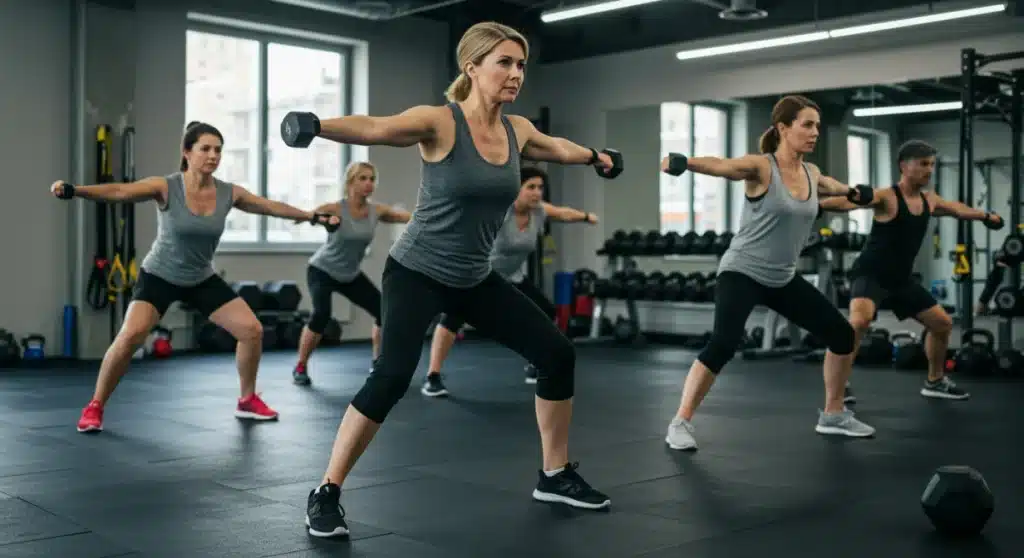
Targeted strength training after age 40 is paramount for preserving muscle mass and enhancing overall health, directly combatting sarcopenia and integrating 2025 geriatric fitness guidelines for sustained vitality.
As we navigate life beyond 40, the importance of maintaining physical strength becomes increasingly apparent. This article explores how dedicated strength training longevity can significantly impact your health, detailing six essential exercises that align with the latest 2025 geriatric fitness guidelines to help you sustain muscle mass and vitality.
The Pivotal Role of Strength Training After 40
After the age of 40, our bodies naturally begin to experience age-related muscle loss, a condition known as sarcopenia. This isn’t merely an aesthetic concern; it significantly impacts metabolism, bone density, balance, and overall quality of life. Embracing a consistent strength training regimen is arguably one of the most effective strategies to counteract this decline, fostering a robust foundation for healthier aging.
The 2025 geriatric fitness guidelines emphasize proactive measures to preserve functional independence and reduce the risk of chronic diseases. These guidelines underscore that strength training is not just for athletes but a fundamental component of healthy aging for everyone. It’s about building resilience, both physically and mentally, to enjoy a vibrant and active life for years to come.
Understanding Sarcopenia and Its Impact
Sarcopenia is characterized by a progressive and generalized loss of skeletal muscle mass and strength. This decline can lead to reduced physical performance, increased risk of falls, and a diminished capacity to perform daily tasks. The good news is that it’s largely preventable and reversible with the right approach to exercise.
- Reduced Metabolism: Less muscle mass means a slower metabolism, making weight management more challenging.
- Decreased Bone Density: Strength training puts stress on bones, stimulating bone growth and reducing osteoporosis risk.
- Impaired Balance and Coordination: Stronger muscles contribute to better stability, significantly lowering fall risk.
- Chronic Disease Prevention: Regular strength training helps manage blood sugar, blood pressure, and cholesterol levels.
By consistently engaging in strength training, individuals over 40 can effectively mitigate these risks, ensuring their bodies remain capable and functional. The focus shifts from merely exercising to training with purpose, guided by principles that support long-term health and well-being.
Foundational Principles of Geriatric Fitness for Strength Training
The 2025 geriatric fitness guidelines highlight several key principles crucial for effective and safe strength training for individuals over 40. These principles are designed to maximize benefits while minimizing injury risk, acknowledging the physiological changes that occur with age. Tailoring workouts to individual capabilities and progressively challenging the body are paramount.
One of the core tenets is consistency. Sporadic workouts yield minimal results. Instead, a regular schedule, typically 2-3 times per week, allows muscles to adapt and grow stronger. Proper form is also non-negotiable; prioritizing technique over heavy weights prevents injuries and ensures the target muscles are effectively engaged.
Progressive Overload and Recovery
Progressive overload, the gradual increase in stress placed on the body during exercise, is fundamental for continued muscle growth. This can involve increasing weight, repetitions, sets, or decreasing rest times. However, equally important is adequate recovery, allowing muscles to repair and rebuild.
- Start Slow: Begin with lighter weights and fewer repetitions, focusing on mastering the movement.
- Listen to Your Body: Pay attention to pain signals and differentiate between muscle soreness and injury.
- Prioritize Rest: Allow 48-72 hours of rest for muscle groups between training sessions.
- Nutrition for Recovery: Consume adequate protein and nutrients to support muscle repair and growth.
These principles form the bedrock of a successful strength training program, ensuring that progress is sustainable and health-promoting. Adhering to them transforms strength training from a temporary activity into a lifelong habit that yields profound benefits.
Exercise 1: The Squat (Bodyweight or Goblet)
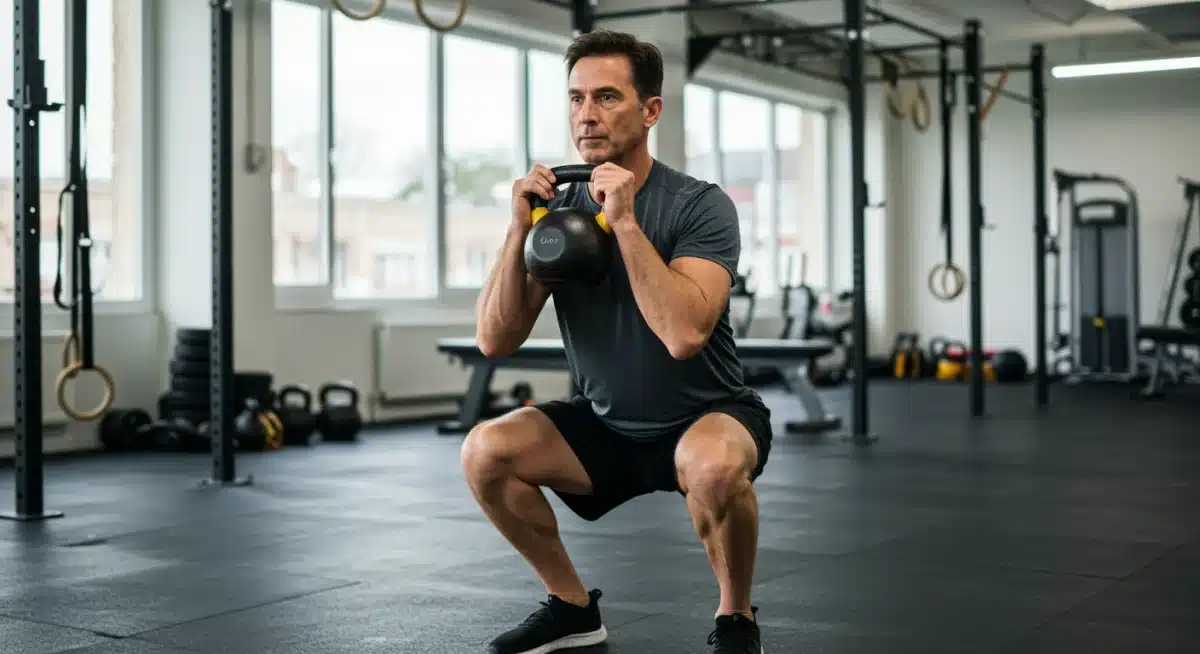
The squat is often hailed as the king of exercises, and for good reason. It’s a fundamental human movement that activates multiple major muscle groups simultaneously, including the quadriceps, hamstrings, glutes, and core. For individuals over 40, mastering the squat, starting with bodyweight and progressing to a goblet squat, is invaluable for maintaining lower body strength, improving balance, and enhancing functional mobility.
Proper squat form is critical to prevent injury and maximize effectiveness. Begin by standing with feet shoulder-width apart, toes slightly pointed out. Initiate the movement by pushing your hips back as if sitting in a chair, keeping your chest up and back straight. Descend until your thighs are parallel to the floor, or as deep as your mobility allows without pain. Drive through your heels to return to the starting position.
Benefits of Squats for Longevity
Regularly performing squats contributes significantly to longevity by addressing several age-related physical challenges. They strengthen the muscles essential for walking, climbing stairs, and getting up from a seated position, tasks that become more challenging with age. This directly translates to greater independence and a reduced risk of falls.
- Enhanced Lower Body Strength: Crucial for daily activities and overall mobility.
- Improved Balance and Stability: Engages core muscles and strengthens stabilizer muscles around the joints.
- Increased Bone Density: Weight-bearing nature stimulates bone growth.
- Better Joint Health: Promotes circulation and nutrient delivery to knee and hip joints.
Incorporating squats into your routine is a powerful step towards safeguarding your physical capabilities as you age. Start with bodyweight and gradually add resistance with a kettlebell or dumbbell held at the chest for a goblet squat, ensuring controlled, deliberate movements.
Exercise 2: The Push-Up (or Incline Push-Up)
The push-up is a versatile and highly effective exercise for building upper body strength, particularly in the chest, shoulders, and triceps, while also engaging the core. For many over 40, a full push-up might initially be challenging, but modifications like incline push-ups against a wall or bench make it accessible to all fitness levels. This exercise is vital for maintaining functional strength, which supports activities like pushing open heavy doors, lifting objects, and even maintaining good posture.
To perform an incline push-up, place your hands on a stable surface (wall, counter, or bench) slightly wider than shoulder-width apart. Keep your body in a straight line from head to heels. Lower your chest towards the surface by bending your elbows, then push back up to the starting position. The steeper the incline, the easier the exercise. As you get stronger, you can gradually lower the incline until you can perform full push-ups on the floor.
Upper Body Strength for Daily Function
Maintaining upper body strength is integral to performing everyday tasks with ease and confidence. Weakness in the chest and shoulders can lead to poor posture, shoulder pain, and difficulty with overhead movements. Push-ups, in their various forms, directly address these concerns, promoting robust upper body function.
- Chest and Shoulder Strength: Essential for pushing movements and carrying objects.
- Triceps Development: Supports extension movements of the arms.
- Core Engagement: Helps stabilize the spine and improve overall body control.
- Improved Posture: Strengthens the muscles that help maintain an upright posture, counteracting slouching.
The adaptability of the push-up makes it an excellent choice for a longevity-focused strength program. Consistency in practicing this exercise will lead to noticeable improvements in upper body strength and functional capacity, contributing significantly to your overall well-being.
Exercise 3: The Row (Dumbbell or Band)
While push-ups focus on pushing movements, the row is equally important for developing pulling strength, targeting the muscles of the back, biceps, and shoulders. This creates a balanced upper body, crucial for preventing imbalances that can lead to shoulder issues and poor posture. For individuals over 40, a dumbbell row or resistance band row is an excellent starting point, offering control and adaptability.
For a dumbbell row, hinge at your hips, keeping your back straight and core engaged. Let one arm hang straight down with a dumbbell, while the other hand supports you on a bench or your knee. Pull the dumbbell towards your hip, squeezing your shoulder blade, then slowly lower it back down. For a resistance band row, anchor the band to a sturdy object, hold the ends, and pull them towards your torso, engaging your back muscles.
Back Health and Posture Improvement
Strong back muscles are fundamental for good posture, spinal health, and preventing back pain, a common complaint as we age. Rows directly strengthen the muscles that support the spine and pull the shoulders back, counteracting the forward-slouching posture often associated with prolonged sitting and age.
- Spinal Support: Strengthens the erector spinae and other muscles supporting the vertebral column.
- Scapular Stability: Improves the control and movement of the shoulder blades, reducing shoulder impingement risk.
- Bicep Strength: Engages the biceps, crucial for lifting and pulling.
- Counteracts Chest Dominance: Balances the strength developed by pushing exercises like push-ups.
Incorporating rows into your routine ensures a well-rounded upper body strength program, promoting healthy movement patterns and reducing the likelihood of pain and injury. This balance is key for sustained functionality and enjoying an active lifestyle.
Exercise 4: The Plank
The plank is a cornerstone exercise for developing core strength, which is far more than just abdominal muscles. A strong core encompasses the entire musculature around your torso and pelvis, providing stability for virtually all movements. For those over 40, a robust core is essential for maintaining balance, preventing back pain, and supporting overall functional fitness, directly aligning with longevity goals.
To perform a plank, begin in a push-up position, then lower onto your forearms, keeping your body in a straight line from head to heels. Engage your abdominal muscles, glutes, and quadriceps to prevent your hips from sagging or rising too high. Focus on maintaining a neutral spine and breathing steadily. Hold this position for a set duration, gradually increasing the time as your strength improves.
Core Strength for Stability and Injury Prevention
A weak core is a primary contributor to lower back pain and an increased risk of falls. The plank, unlike traditional crunches, trains the core muscles to stabilize the spine and pelvis, which is how they function in real-world movements. This static strength translates into dynamic stability, improving posture and reducing the strain on your back during daily activities.
- Spinal Stability: Strengthens the deep core muscles that support the lumbar spine.
- Improved Balance: A stable core is fundamental for maintaining equilibrium.
- Reduced Back Pain: By strengthening supporting muscles, stress on the lower back is alleviated.
- Enhanced Athletic Performance: A strong core acts as the power center for all movements.
Integrating planks into your strength training routine is a simple yet profoundly effective way to invest in your long-term health and mobility. Consistency, even for short durations, will yield significant improvements in core stability and overall body control.
Exercise 5: The Glute Bridge
The glute bridge is a fantastic exercise for strengthening the glutes (buttocks), hamstrings, and lower back muscles. These muscles are often underactive due to prolonged sitting, leading to weakness and potential issues in the hips and lower back. For individuals over 40, strong glutes are crucial for hip health, powerful walking, and protecting the knees and lower back, making it an essential exercise for longevity.
Lie on your back with your knees bent, feet flat on the floor and hip-width apart, and arms by your sides. Engage your core and glutes, then push through your heels to lift your hips off the floor until your body forms a straight line from your shoulders to your knees. Squeeze your glutes at the top, then slowly lower your hips back down. Avoid arching your lower back excessively.
Activating Posterior Chain for Functional Movement
The glute bridge effectively targets the posterior chain, a group of muscles on the backside of your body critical for walking, running, and jumping. Strengthening these muscles improves force production, enhances hip extension, and promotes better movement mechanics, all vital for maintaining an active lifestyle as you age.
- Gluteal Activation: Directly strengthens the gluteus maximus, medius, and minimus.
- Hamstring Engagement: Supports knee flexion and hip extension.
- Lower Back Support: Strengthens the muscles that protect and stabilize the lumbar spine.
- Improved Hip Mobility: Promotes healthy hip function and reduces stiffness.
Regularly performing glute bridges will contribute significantly to your lower body strength and overall functional capacity, safeguarding your hips and back while enhancing your ability to move with power and ease.
Exercise 6: The Bird-Dog
The bird-dog is a deceptively simple yet incredibly effective exercise for improving core stability, balance, and coordination, particularly targeting the deep spinal stabilizers. It’s a low-impact movement that is highly beneficial for individuals over 40, helping to prevent back pain and enhance proprioception – your body’s sense of its position in space. These aspects are paramount for maintaining mobility and reducing fall risk as part of a comprehensive longevity strategy.
Start on all fours, with your hands directly under your shoulders and knees under your hips. Keep your back flat and core engaged. Slowly extend one arm straight forward while simultaneously extending the opposite leg straight back, keeping your hips level and avoiding any rotation. Hold for a moment, then slowly return to the starting position and repeat on the other side. Focus on controlled, smooth movements rather than speed.
Balance and Spinal Health
The bird-dog exercise directly addresses the critical need for improved balance and spinal health in older adults. By challenging your body to stabilize while moving opposing limbs, it strengthens the deep core muscles and enhances neuromuscular control. This translates to better stability in daily activities and a reduced likelihood of injuries from unexpected movements.
- Core Stability: Engages the transverse abdominis and multifidus, crucial for spinal support.
- Improved Balance: Challenges proprioception and coordination, reducing fall risk.
- Back Pain Prevention: Strengthens muscles that protect the lumbar spine.
- Enhanced Body Awareness: Fosters better control over body movements and posture.
Incorporating the bird-dog into your routine is a gentle yet powerful way to build a more resilient core and improve your overall balance and coordination, supporting a long and active life.
| Key Exercise | Longevity Benefit |
|---|---|
| Squat | Enhances lower body strength, balance, and functional mobility crucial for daily tasks. |
| Push-Up | Builds upper body strength, improves posture, and supports pushing movements. |
| Row | Develops pulling strength, promotes back health, and corrects postural imbalances. |
| Plank | Strengthens the core for stability, balance, and prevention of lower back pain. |
Frequently Asked Questions About Strength Training and Longevity
Most guidelines recommend engaging in strength training 2-3 times per week, with at least one rest day between sessions for each muscle group. This frequency allows for adequate muscle recovery and adaptation, leading to consistent progress and reduced risk of overtraining or injury.
Absolutely not. It’s never too late to begin strength training and reap its benefits. Studies consistently show that individuals of all ages, including those well into their 70s and 80s, can significantly improve muscle mass, strength, and functional capacity through a consistent resistance training program.
Signs of sarcopenia include noticeable loss of muscle mass, decreased strength, difficulty performing daily tasks like climbing stairs or lifting objects, slower walking speed, and an increased risk of falls. Early detection and intervention through strength training and nutrition are crucial for managing this condition.
Yes, strength training is highly effective for weight management. Muscle tissue is more metabolically active than fat tissue, meaning it burns more calories at rest. By increasing muscle mass, you boost your resting metabolism, making it easier to maintain a healthy weight and reduce body fat percentage.
It is always advisable to consult with a healthcare professional or a certified fitness expert before embarking on any new exercise program, especially if you have pre-existing health conditions or haven’t been physically active for a while. They can provide personalized advice and ensure the program is safe and appropriate for your needs.
Conclusion
Embracing strength training after age 40 is not merely about maintaining aesthetics; it’s a profound investment in your future health, independence, and overall quality of life. By incorporating these six essential exercises and adhering to the principles outlined in the 2025 geriatric fitness guidelines, you can effectively combat age-related muscle loss, enhance your physical capabilities, and lay a strong foundation for sustained longevity. Prioritizing consistent, progressive, and mindful strength training will empower you to enjoy an active, vibrant, and fulfilling life for many years to come.