Master Meal Planning: 4-Week Challenge for Balanced Nutrition & Savings
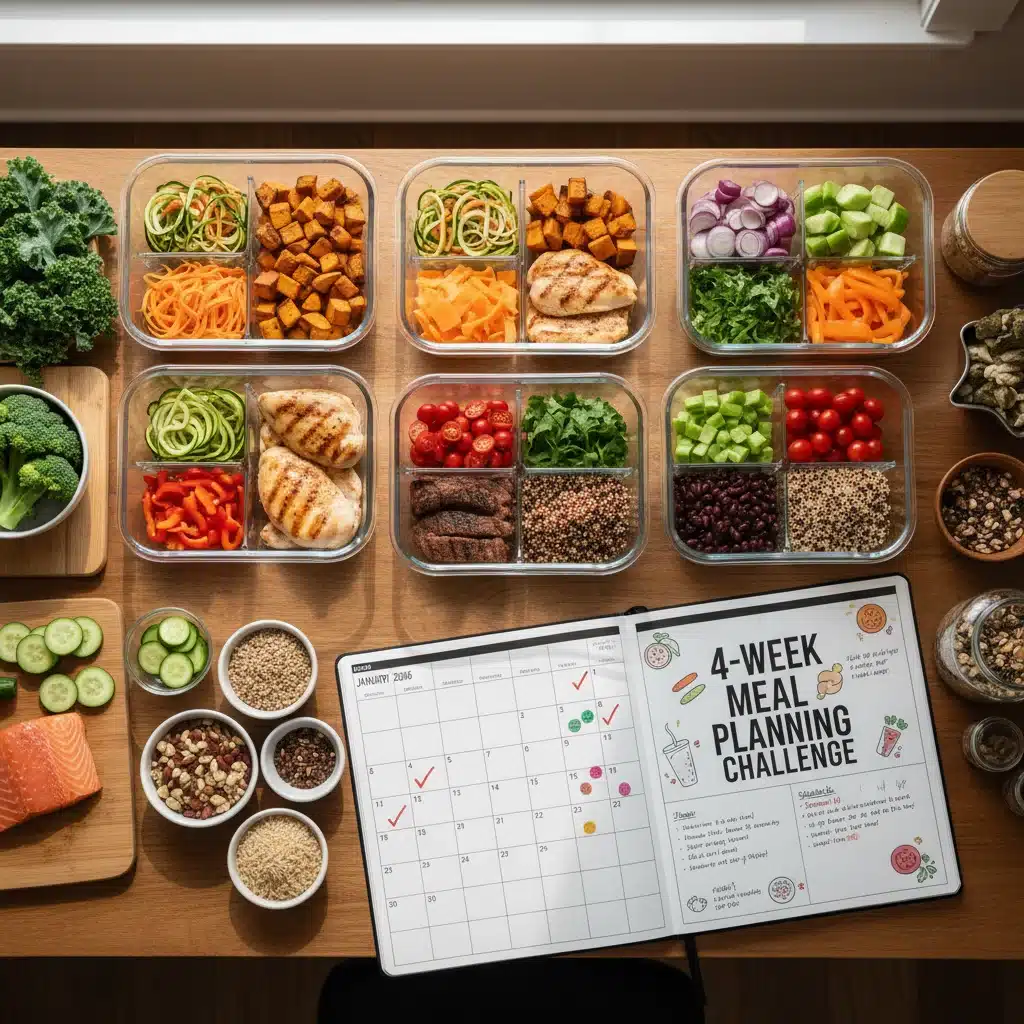
Are you tired of the daily “what’s for dinner?” dilemma? Do you wish you could eat healthier, reduce food waste, and save money all at the same time? If so, you’re in the right place! Welcome to our comprehensive 4-week meal planning challenge, designed to transform your relationship with food, streamline your kitchen routine, and put an extra $50 (or more!) back into your pocket each month. Starting January 2026, we’re inviting you to embark on a journey that will not only simplify your life but also significantly improve your overall well-being.
Meal planning often sounds daunting, conjuring images of endless spreadsheets and meticulous calculations. However, it doesn’t have to be. Our 4-week meal planning challenge breaks down the process into manageable, actionable steps, ensuring that by the end of the month, you’ll be a meal planning pro. We’ll cover everything from setting clear goals and building a practical pantry to crafting delicious, nutritious menus and mastering the art of grocery shopping. Get ready to discover the power of mindful eating and efficient kitchen management.
The Un undeniable Benefits of 4-Week Meal Planning
Before we dive into the specifics of our 4-week meal planning challenge, let’s explore why this practice is so incredibly beneficial. Understanding the ‘why’ can be a powerful motivator to stick with it, even when things get busy.
1. Achieving Balanced Nutrition
One of the primary advantages of consistent 4-week meal planning is the ability to ensure a balanced intake of nutrients. When you plan your meals in advance, you can consciously include a variety of fruits, vegetables, whole grains, lean proteins, and healthy fats. This proactive approach helps you avoid falling into the trap of repetitive, unbalanced meals or relying on unhealthy convenience foods when hunger strikes. It allows you to track your macronutrients and micronutrients, ensuring your body gets everything it needs to thrive. For instance, you can strategically incorporate different colored vegetables throughout the week to maximize your vitamin and antioxidant intake. Planning ensures you’re not just eating, but truly nourishing your body.
2. Significant Financial Savings
This is where the promise of saving $50 (or more!) monthly comes into play. Impulse purchases at the grocery store, frequent takeout orders, and wasted food are major drains on your budget. With a solid 4-week meal planning strategy, you’ll buy only what you need, reducing food waste to a minimum. You’ll also be less likely to opt for expensive last-minute meals because you already have a delicious, healthy option waiting for you. By planning ahead, you can take advantage of sales, buy in bulk when appropriate, and make your ingredients stretch further. Imagine what an extra $600 a year could do for your financial goals!
3. Time Management and Reduced Stress
Think about the mental energy expended each day deciding what to cook, checking if you have the ingredients, and then actually preparing the meal. Meal planning eliminates this daily grind. By dedicating a small amount of time once a week (or even once a month for a 4-week meal planning cycle), you free up precious time and mental space during busy weekdays. Coming home after a long day knowing exactly what you’ll eat, and even having some of it prepped, is a huge stress reliever. This efficiency translates into more time for hobbies, family, or simply relaxing.
4. Reduced Food Waste
Food waste is a global issue, and it’s also a personal one. We often buy fresh produce with good intentions, only for it to wilt in the fridge before we get a chance to use it. 4-week meal planning helps you buy exactly what you need for specific recipes, ensuring that ingredients are used before they spoil. You can also plan to repurpose leftovers or use versatile ingredients across multiple meals, further minimizing waste. This is not only good for your wallet but also for the environment.
5. Portion Control and Weight Management
When you plan your meals, you’re more likely to consider portion sizes. This conscious effort can be incredibly helpful for weight management goals, whether you’re looking to lose, maintain, or gain weight. Having pre-portioned meals or a clear idea of how much you’re cooking helps prevent overeating and ensures you’re consuming appropriate amounts for your energy needs. It brings a level of mindfulness to your eating habits that is often lost in spontaneous meal decisions.
Preparing for Your 4-Week Meal Planning Journey: Week 1 Focus
The first week of our 4-week meal planning challenge is all about preparation, assessment, and setting a solid foundation. Don’t skip these crucial steps!
Step 1: Assess Your Current Eating Habits and Goals
Before you can plan where you’re going, you need to know where you are. Take a few days to honestly track your current eating habits. What do you typically eat for breakfast, lunch, and dinner? How often do you eat out or order takeout? What are your go-to snacks? This awareness will highlight areas for improvement. Next, define your goals for this 4-week meal planning challenge. Are you aiming for weight loss, muscle gain, better energy levels, reducing processed foods, or simply saving money? Specific goals will guide your meal choices.
Step 2: Pantry and Fridge Purge & Inventory
This might sound like a chore, but it’s incredibly satisfying and essential. Go through your pantry, fridge, and freezer. Discard anything expired or questionable. Take stock of what you already have. This inventory is a goldmine for saving money, as you can plan meals around existing ingredients. Organize your pantry so you can easily see what you have, which will prevent duplicate purchases. A well-organized kitchen is a meal planner’s best friend.
Step 3: Gather Resources and Inspiration
Start collecting recipes! Look for healthy, appealing recipes that fit your dietary preferences and skill level. Cookbooks, food blogs, Pinterest, and healthy eating websites are great resources. Pay attention to recipes that use similar ingredients, as this can further reduce waste and simplify your grocery list. Consider batch-cooking-friendly recipes for efficiency. During this 4-week meal planning journey, you’ll discover new favorites.
Step 4: Choose Your Meal Planning Method
There’s no one-size-fits-all approach. Some people prefer a digital app, others a simple pen and paper, and some opt for customizable templates. Experiment in the first week to see what works best for you. The key is to find a system that you’ll stick with. Your method should allow you to easily list meals, ingredients, and notes for each week of your 4-week meal planning cycle.
The Core of the 4-Week Meal Planning Challenge: Weekly Breakdown
Here’s how we’ll structure your 4-week meal planning journey, building skills and confidence week by week.
Week 1: Foundations and Simplicity
Goal: Get comfortable with the basic concept of meal planning and grocery shopping. Focus on simple, familiar recipes.
- Plan: Start by planning just dinners for the first few days, then gradually add lunches and breakfasts. Keep recipes simple with minimal ingredients. Re-use ingredients across meals (e.g., roasted chicken for dinner one night, then in a salad or sandwich the next day).
- Shopping: Create a detailed grocery list based on your plan. Stick to it! Avoid impulse buys.
- Prep: Dedicate 1-2 hours for basic prep on a designated day (e.g., Sunday). Wash and chop vegetables, cook a batch of grains (quinoa, brown rice), and pre-cook some protein if desired.
- Reflection: What worked? What didn’t? Adjust for next week.
Week 2: Expanding Your Repertoire and Efficiency
Goal: Introduce a few new recipes, refine your grocery shopping, and optimize prep time.
- Plan: Challenge yourself to try 1-2 new, healthy recipes. Think about themed nights (Meatless Monday, Taco Tuesday) to make planning easier. Consider planning for snacks this week.
- Shopping: Compare prices at different stores if feasible, or look for sales on your planned ingredients. Use your existing pantry items first.
- Prep: Focus on more advanced prep. Could you double a recipe and freeze half for a future meal? Can you make a large batch of salad dressing or healthy sauce?
- Reflection: Are you saving time? Are you enjoying the food? How much have you saved so far?

Week 3: Mastering Flexibility and Customization
Goal: Learn to adapt your plan to unexpected events and personalize it further.
- Plan: Life happens! This week, practice having a ‘flex meal’ or ‘leftover night’ built into your plan. This prevents stress if a meal gets pushed back or you have extra food. Experiment with ingredient swaps to see how versatile your recipes can be.
- Shopping: Continue to be mindful of your budget. Look for seasonal produce, which is often cheaper and more flavorful.
- Prep: Focus on making components that can be mixed and matched (e.g., a batch of roasted vegetables that can go into a stir-fry, a pasta dish, or a grain bowl).
- Reflection: How well did you adapt? Are you feeling more confident in your 4-week meal planning abilities?
Week 4: Long-Term Strategies and Review
Goal: Solidify your habits and create a sustainable, ongoing meal planning system.
- Plan: Review your favorite meals from the past three weeks. Create a rotating list of go-to recipes that you can easily pull from. Consider a monthly meal plan outline, then fill in the weekly details.
- Shopping: Evaluate your typical weekly spend. Have you met your $50 saving goal? Identify further areas for savings.
- Prep: Think about freezer meals. Can you prepare a few meals that can be frozen and reheated on busy nights? This is a game-changer for long-term consistency.
- Reflection: Celebrate your success! You’ve completed the 4-week meal planning challenge. What does your future meal planning look like?
Essential Tips for Successful 4-Week Meal Planning
1. Start Small and Be Realistic
Don’t try to overhaul your entire diet and cook gourmet meals every night from day one. Begin by planning just dinners, or even just 3-4 meals a week. As you gain confidence and see the benefits, you can gradually expand. Overambitious plans are a recipe for burnout.
2. Theme Your Days
As mentioned, themed nights can simplify decision-making. “Taco Tuesday,” “Pasta Wednesday,” “Fish Friday,” “Soup Saturday” – these can help you quickly fill in your weekly schedule for your 4-week meal planning journey without feeling overwhelmed.
3. Embrace Batch Cooking
This is arguably the most powerful tool in a meal planner’s arsenal. Dedicate a few hours on a weekend to cook large quantities of staples like grains, roasted vegetables, and proteins. These can then be assembled into various meals throughout the week. For example, a batch of grilled chicken can become chicken salad, a stir-fry addition, or part of a pasta dish.
4. Utilize Leftovers Wisely
Leftovers are not failures; they’re planned meals! Cook extra portions of dinner to pack for lunch the next day. This saves time and money. Invest in good quality, microwave-safe containers to make packing and reheating easy.
5. Keep a Running Grocery List
As you run out of items or realize you’ll need something for a future meal, add it to a running grocery list immediately. This prevents those annoying last-minute dashes to the store and ensures your weekly shopping trip is comprehensive and efficient.
6. Don’t Forget Snacks and Drinks
Many meal plans focus solely on main meals, but snacks and drinks can derail your healthy eating and budget goals. Plan for healthy snacks like fruit, nuts, yogurt, or chopped veggies. This prevents unhealthy impulse snacking.
7. Be Flexible and Adaptable
Life is unpredictable. Sometimes plans change, you get invited out, or you just don’t feel like cooking what you planned. It’s okay! Don’t let one missed meal derail your entire 4-week meal planning effort. Adjust, swap meals around, or rely on a healthy backup option. The goal is consistency, not perfection.
8. Involve the Family
If you live with others, get them involved in the meal planning process. Ask for their favorite meals, assign simple tasks during prep, or let them choose a meal for the week. This fosters buy-in and makes the process more enjoyable for everyone.
9. Invest in Good Storage Containers
A set of good quality, airtight food storage containers (glass is often preferred for durability and ease of cleaning) will make your meal prep and leftover storage infinitely easier and more appealing. This small investment pays dividends in convenience and food preservation throughout your 4-week meal planning challenge and beyond.
10. Track Your Progress
Keep a simple journal or use an app to track your meal plans, what you spent on groceries, and how you feel. Seeing your progress, especially the financial savings and improved well-being, will be a huge motivator to continue your 4-week meal planning habits long-term.
Sample 4-Week Meal Planning Ideas to Get You Started
To give you a concrete idea, here are some suggestions for meals that are versatile, healthy, and budget-friendly, perfect for your 4-week meal planning challenge:
Breakfast Ideas:
- Overnight Oats (prepare once for 3-4 days)
- Scrambled Eggs with Spinach and Whole-Wheat Toast
- Yogurt Parfait with Berries and Granola
- Smoothie (pre-portioned frozen fruit/veg packs)
- Whole-Wheat Pancakes/Waffles (make a big batch and freeze)
Lunch Ideas:
- Big Batch Salad with Grilled Chicken/Chickpeas (keep dressing separate)
- Leftover Dinner from the night before
- Turkey and Veggie Wraps
- Hearty Lentil Soup (makes a large batch)
- Tuna Salad or Chickpea Salad Sandwiches on Whole Grain Bread
Dinner Ideas:
- Sheet Pan Dinners (chicken/sausage and various roasted vegetables – easy cleanup!)
- One-Pot Pasta Dishes
- Stir-fries with Tofu/Chicken and plenty of vegetables
- Chili or Stew (great for batch cooking and freezing)
- Homemade Pizzas on whole-wheat crusts
- Lentil or Black Bean Burgers with Sweet Potato Fries
- Baked Salmon with Quinoa and Steamed Asparagus
- Chicken and Vegetable Curry
- Ground Turkey or Beef Lettuce Wraps
- Black Bean Tacos or Burrito Bowls

Overcoming Common Meal Planning Hurdles
Even with the best intentions, you might encounter some challenges during your 4-week meal planning journey. Here’s how to tackle them:
1. Lack of Time:
This is the most common excuse. Remember, meal planning is an investment that *saves* you time later. Start with minimal prep meals, utilize batch cooking, and don’t be afraid of simple, repetitive meals for a few days. Even 30 minutes of planning and an hour of prep can make a huge difference.
2. Getting Bored with Food:
Variety is key! Don’t plan the exact same meals every single week. Use a rotation of your favorite recipes, and introduce one new recipe each week to keep things exciting. Experiment with different cuisines and flavor profiles. Remember, a 4-week meal planning cycle doesn’t mean eating the same 28 meals constantly; it means having a flexible framework.
3. Dietary Restrictions or Picky Eaters:
This requires a bit more creativity. Look for recipes that can be easily adapted (e.g., serving a main dish with separate sides that cater to different preferences). Involve family members in the planning process to ensure everyone has a say and feels included. Sometimes, having a designated “make-your-own” meal night (like taco bar or build-your-own pizza) can be a fun solution.
4. Unexpected Changes:
As mentioned, flexibility is crucial. Have a few “emergency meals” on hand (e.g., frozen healthy pizzas, quick pasta dishes with pantry staples). Don’t beat yourself up if you have to deviate from the plan. Simply get back on track with your next meal.
5. Forgetting Ingredients:
A comprehensive grocery list is your best defense. Double-check your list against your recipes before heading to the store. Consider using a digital list that you can update on the go and check off items as you shop.
Beyond the 4-Week Meal Planning Challenge: Sustaining the Habit
Completing this 4-week meal planning challenge is a fantastic achievement, but the goal is to make it a sustainable lifestyle habit. Here’s how you can continue to reap the benefits long-term:
- Create a Recipe Bank: Keep a digital or physical collection of your favorite, tried-and-true recipes that fit your goals and budget. Organize them by meal type or main ingredient.
- Seasonal Eating: Incorporate seasonal produce into your plans. It’s often fresher, more flavorful, and less expensive.
- Review and Adjust: Periodically review your meal planning process. What’s working well? What needs tweaking? Your needs and preferences may change, and your plan should evolve with you.
- Don’t Aim for Perfection: Some weeks will be easier than others. The occasional slip-up is part of life. The key is to consistently return to your planning habits.
- Celebrate Small Wins: Acknowledge your efforts and successes. Whether it’s a perfectly executed meal, a significant saving, or simply a less stressful week, recognize your achievements.
Conclusion: Your Journey to a Healthier, Happier You Starts Now
The 4-week meal planning challenge is more than just about food; it’s about taking control of your health, your time, and your finances. By dedicating a small amount of effort to planning, you unlock a cascade of positive changes that will impact every aspect of your life. Imagine having more energy, feeling less stressed, enjoying delicious and nutritious meals, and having extra money in your bank account. This isn’t a pipe dream; it’s an achievable reality with consistent meal planning.
Starting January 2026, commit to this challenge. Follow our weekly guide, integrate our tips, and be patient with yourself. You’ll be amazed at the transformation. Say goodbye to food waste, impulse buys, and dinner dilemmas, and hello to balanced nutrition, significant savings, and a newfound peace of mind in your kitchen. Your journey to a healthier, happier, and more organized life begins with this 4-week meal planning commitment. Let’s get planning!