2026 Research: 15 Mins Daily Stretching & Athletic Recovery

The latest 2026 research indicates that incorporating just 15 minutes of daily stretching into an athlete’s routine profoundly impacts recovery, leading to improved flexibility, reduced muscle soreness, and enhanced overall performance. This simple practice is emerging as a cornerstone of effective athletic care.
In the relentless pursuit of peak athletic performance, recovery is often the unsung hero. New findings from 2026 are shedding an illuminating light on a surprisingly simple yet profoundly effective strategy: how 15 minutes of daily stretching impacts athletic recovery. This isn’t just about feeling good; it’s about optimizing physiological processes to bounce back faster, stronger, and more resilient. Let’s delve into what this cutting-edge research reveals about making daily stretching a cornerstone of your fitness regimen.
The Science Behind Stretching and Muscle Repair
Understanding how stretching aids muscle repair is crucial to appreciating its role in athletic recovery. For years, stretching has been a staple in warm-up and cool-down routines, but recent studies from 2026 are refining our understanding of its specific benefits for post-exertion healing. It’s not merely about lengthening muscles; it’s about facilitating cellular processes.
When muscles undergo intense exercise, they experience micro-tears and metabolic waste accumulation. Stretching, particularly dynamic and static forms, plays a multifaceted role in addressing these issues. Dynamic stretching can improve blood flow to muscle tissues, delivering essential nutrients and oxygen while helping to clear waste products like lactic acid. Static stretching, performed after activity, can aid in realigning muscle fibers and reducing muscle stiffness.
Cellular Regeneration and Blood Flow
The latest research highlights stretching’s direct impact on cellular regeneration. By gently extending muscle fibers, stretching can stimulate mechanoreceptors, which in turn signal cells to initiate repair processes. This mechanical tension is believed to encourage the synthesis of new proteins and the repair of damaged structures.
- Improved nutrient delivery to muscle cells.
- Enhanced removal of metabolic byproducts.
- Stimulation of cellular repair mechanisms.
- Reduction in post-exercise inflammation.
Furthermore, increased blood flow is paramount. Consistent, gentle stretching can help maintain the elasticity of blood vessels within muscle tissue, ensuring a more efficient circulatory system. This means faster transport of inflammatory mediators away from the site of injury and quicker delivery of growth factors needed for repair. The cumulative effect of these physiological adaptations is a significantly accelerated recovery timeline, allowing athletes to return to training sooner and with less residual fatigue.
Flexibility and Injury Prevention in 2026
Beyond immediate recovery, the 2026 research strongly emphasizes the long-term benefits of daily stretching for flexibility and, by extension, injury prevention. A flexible body is a resilient body, capable of absorbing greater impact and adapting to diverse movement patterns without succumbing to strain or tears. This is particularly relevant for athletes across all disciplines.
Increased range of motion (ROM) is a cornerstone of athletic performance. When muscles and joints are supple, movements become more fluid and efficient, translating to better power output and agility. Daily stretching systematically works to lengthen muscle fibers and connective tissues, preventing the stiffness that can accumulate from repetitive training or prolonged static postures.
Understanding Connective Tissue Adaptation
Connective tissues, including ligaments and tendons, also benefit significantly from regular stretching. While these tissues are less elastic than muscle, consistent, gentle tension can promote their adaptive remodeling. This means they become more pliable and less prone to sudden tears or sprains. The 2026 studies show that even short, consistent stretching sessions contribute to healthier, more adaptable connective tissues over time.
- Enhanced joint mobility and stability.
- Reduced muscle imbalances that lead to compensatory movements.
- Increased tissue tolerance to external forces.
- Lower risk of common athletic injuries like strains and pulls.
Injury prevention isn’t just about avoiding acute trauma; it’s also about mitigating chronic issues. Tendinopathies, for instance, often arise from repetitive stress on inflexible tissues. By maintaining optimal flexibility through daily stretching, athletes can reduce the cumulative micro-trauma that leads to these painful and debilitating conditions. This proactive approach ensures a longer, healthier athletic career.
Optimizing Performance Through Enhanced Recovery
The direct link between efficient recovery and optimized athletic performance is undeniable, and the 2026 findings cement daily stretching as a critical component. When an athlete recovers effectively, their body is better prepared to handle the next training session or competition, leading to consistent improvements and reduced plateaus. This goes beyond just feeling less sore.
Effective recovery means that muscular fatigue is minimized, neural pathways are restored, and energy stores are replenished more rapidly. A body that is not constantly fighting residual soreness or stiffness can dedicate more resources to actual performance. This translates to higher quality training sessions, where athletes can push harder, maintain proper form, and execute complex movements with greater precision.
Neuromuscular Efficiency and Reduced Fatigue
Daily stretching also plays a role in improving neuromuscular efficiency. By maintaining muscle length and reducing tension, it allows for better communication between the brain and muscles. This can lead to faster reaction times, improved coordination, and more powerful contractions. When muscles are less restricted, they can fire more effectively.
- Sustained high-intensity performance during workouts.
- Faster recovery of force production post-exercise.
- Improved movement economy and reduced energy expenditure.
- Enhanced mental focus due to reduced physical discomfort.
Furthermore, the psychological benefits of reduced fatigue cannot be underestimated. Athletes who feel consistently recovered are more motivated, less prone to overtraining syndrome, and better equipped to handle the mental demands of their sport. The cumulative effect of optimized physical and mental states driven by effective recovery is a significant boost in overall athletic potential and sustained peak performance.
Integrating 15 Minutes of Daily Stretching into Your Routine
The practicality of integrating just 15 minutes of daily stretching makes it an accessible and highly beneficial practice for any athlete, regardless of their sport or current fitness level. The key is consistency and finding the right types of stretches that complement your specific training demands. The 2026 research emphasizes that this doesn’t need to be a complex, hour-long session.
For many, the ideal time for daily stretching might be immediately after a workout, during a cool-down phase, when muscles are warm and more pliable. However, for those with busy schedules, breaking it into smaller segments throughout the day can be equally effective. For example, 5 minutes in the morning, 5 minutes at midday, and 5 minutes before bed can still yield significant results.
Effective Stretching Techniques
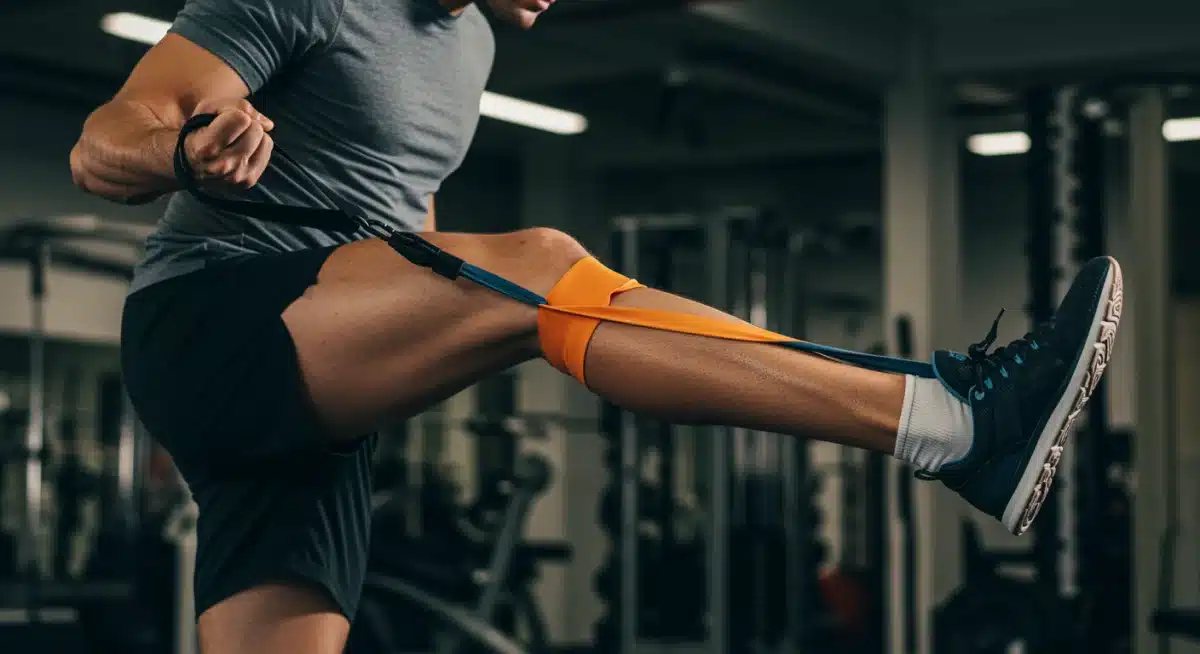
While static stretching is often highlighted for recovery, a combination of dynamic and static approaches can be most beneficial. Dynamic stretches, like leg swings or arm circles, can be incorporated into a warm-up, preparing muscles for activity. Static stretches, holding a position for 20-30 seconds, are best reserved for post-activity or as a dedicated flexibility session.
- Focus on major muscle groups used in your sport.
- Hold static stretches for 20-30 seconds, without bouncing.
- Incorporate dynamic stretches as part of your warm-up.
- Consider PNF (Proprioceptive Neuromuscular Facilitation) techniques for deeper gains.
Listen to your body and avoid stretching to the point of pain. Gentle tension is the goal, aiming to gradually increase your range of motion over time. Consistency truly is the most important factor. Making it a non-negotiable part of your daily routine, perhaps by pairing it with another habit, will ensure you reap the profound benefits highlighted by the latest scientific findings.
The Long-Term Athletic Benefits of Consistent Stretching
The cumulative effects of consistent, daily stretching extend far beyond immediate recovery, shaping an athlete’s long-term health, performance, and overall well-being. The 2026 studies underscore that this seemingly small investment of 15 minutes a day builds a foundation for sustained athletic excellence and reduced age-related decline in mobility. It’s about building a more resilient and adaptable body over time.
As athletes age, natural physiological changes can lead to decreased flexibility and increased joint stiffness. Regular stretching can significantly mitigate these effects, helping to maintain a youthful range of motion and functional capacity. This means a longer, more enjoyable athletic career and a higher quality of life beyond competitive years. It’s a preventive measure against the gradual stiffening that can impact daily activities as much as sport.
Maintaining Joint Health and Posture
Consistent stretching supports optimal joint health by promoting the lubrication of synovial fluid and maintaining the integrity of cartilage. It also helps to correct and prevent postural imbalances that can arise from sport-specific movements or prolonged sitting. Good posture is fundamental for efficient movement and preventing chronic pain.
- Reduced risk of chronic joint pain and arthritis.
- Improved body alignment and reduced postural stress.
- Enhanced body awareness and proprioception.
- Greater ease in performing everyday movements.
Ultimately, the long-term benefits of daily stretching contribute to a holistic approach to athletic development. It’s not just about winning races or lifting heavier weights today, but about fostering a body that can continue to perform optimally and pain-free for decades to come. This commitment to flexibility and recovery is an investment in an athlete’s entire future, both in and out of their chosen sport.
Future Outlook: Stretching Research in Sports Science (2026+)
The year 2026 marks a significant point in understanding the nuances of stretching, but research in sports science is an ever-evolving field. The future outlook suggests even more personalized and technologically advanced approaches to optimizing flexibility and recovery. Scientists are continuously refining methodologies to precisely measure the physiological impacts of various stretching protocols, moving beyond generalized recommendations to highly tailored interventions.
Emerging technologies are playing a crucial role in this advancement. Wearable devices capable of monitoring muscle elasticity in real-time, sophisticated motion capture systems that analyze joint ROM with unprecedented accuracy, and even AI-driven platforms that can recommend personalized stretching routines based on individual biometric data are on the horizon. This will allow athletes and coaches to make even more informed decisions.
Personalized Stretching Protocols
The trend is towards highly individualized stretching prescriptions. Instead of a one-size-fits-all approach, future research will likely focus on:
- Genetic predispositions to flexibility and injury.
- Sport-specific demands and muscle imbalances.
- Recovery needs based on training load and intensity.
- The integration of active recovery techniques with stretching.
Furthermore, the interplay between hydration, nutrition, and stretching will be explored in greater detail. How specific dietary components or hydration strategies can enhance the efficacy of stretching for recovery and flexibility is an exciting area of ongoing investigation. The goal is to create a complete ecosystem of recovery strategies where stretching is a central, yet deeply integrated, component. The insights gained from these future studies will undoubtedly lead to even greater optimizations in athletic recovery and performance, solidifying daily stretching’s place as a fundamental pillar of sports care.
| Key Aspect | Impact of Daily Stretching |
|---|---|
| Muscle Recovery | Accelerates repair, reduces soreness, and clears metabolic waste by improving blood flow. |
| Injury Prevention | Enhances flexibility, increases range of motion, and strengthens connective tissues, lowering injury risk. |
| Performance Optimization | Boosts neuromuscular efficiency, reduces fatigue, and improves training quality. |
| Long-Term Health | Maintains joint health, improves posture, and supports sustained athletic longevity. |
Frequently Asked Questions About Daily Stretching
Yes, according to 2026 research, 15 minutes of daily stretching significantly enhances athletic recovery. This consistent practice improves blood flow, reduces muscle soreness, and helps clear metabolic waste, allowing athletes to bounce back faster and more effectively from training and competition.
For post-exercise recovery, static stretching is generally most effective. Holding stretches for 20-30 seconds per muscle group helps to lengthen tissues and reduce stiffness. Dynamic stretching is better suited for warm-ups, preparing muscles for activity. A combination, with static post-workout, yields comprehensive benefits.
Absolutely. Daily stretching significantly contributes to injury prevention by increasing flexibility, improving range of motion, and correcting muscle imbalances. This makes muscles and connective tissues more resilient to stress and less prone to strains, sprains, and other common athletic injuries, as supported by recent studies.
While stretching after a workout when muscles are warm is ideal, the 2026 research emphasizes consistency over specific timing. Breaking 15 minutes into smaller segments (e.g., 5 minutes in the morning, afternoon, and evening) can be just as effective if it ensures daily adherence. The most optimal time is when you can consistently commit.
Long-term, daily stretching enhances athletic performance by improving neuromuscular efficiency, maintaining joint health, and preserving flexibility as athletes age. It reduces chronic pain risks, supports better posture, and extends an athlete’s active career, contributing to overall physical well-being far beyond competitive years.
Conclusion
The latest research from 2026 unequivocally highlights the transformative power of incorporating just 15 minutes of daily stretching into an athlete’s routine. This seemingly modest commitment yields substantial dividends, profoundly impacting athletic recovery by accelerating muscle repair, reducing soreness, and enhancing overall physical resilience. Beyond immediate recovery, consistent stretching is a potent tool for injury prevention, fostering greater flexibility, and ultimately optimizing long-term performance. As sports science continues to evolve, the emphasis on personalized and consistent flexibility practices will only grow, cementing daily stretching as an indispensable component of comprehensive athletic care for all.