Beyond the Gym: Daily Movement for 300 Extra Calories Burned

Integrating daily movement to burn an extra 300 calories is achievable through practical adjustments to routine, emphasizing non-exercise activity thermogenesis (NEAT) for sustainable health benefits, as highlighted by 2025 fitness trends.
The quest for a healthier lifestyle often conjures images of intense gym sessions and strict dietary regimens. However, the future of fitness, as predicted by 2025 trends, points towards a more integrated approach. This article delves into the concept of
daily movement calories, offering four practical solutions to burn an extra 300 calories beyond traditional workouts, emphasizing how small, consistent changes can make a significant impact on your overall well-being.
Understanding non-exercise activity thermogenesis (NEAT)
Non-exercise activity thermogenesis, or NEAT, encompasses all the energy expended for everything we do that is not sleeping, eating, or sports-like exercise. It includes activities like walking to work, typing, performing yard work, and even fidgeting.
NEAT is a highly variable component of total daily energy expenditure and can differ by up to 2,000 calories per day between individuals of similar size, highlighting its potential for calorie burning.
The significance of NEAT is often underestimated in the pursuit of fitness goals. While structured exercise is undoubtedly beneficial, the cumulative effect of small, consistent movements throughout the day can be profound. In an increasingly sedentary world,
where many jobs require prolonged sitting, consciously increasing NEAT is becoming a crucial strategy for maintaining health and managing weight.
The science behind NEAT’s impact
Research indicates that NEAT plays a vital role in metabolic health. Individuals with higher NEAT levels tend to have lower risks of obesity, type 2 diabetes, and cardiovascular diseases. This is because NEAT helps to regulate blood sugar levels,
improve insulin sensitivity, and contribute to overall energy balance. It’s not just about burning calories; it’s about fostering a more active physiology.
-
Metabolic boost: Regular NEAT can elevate your metabolic rate throughout the day.
-
Improved insulin sensitivity: Standing and moving more helps cells respond better to insulin.
-
Reduced health risks: Higher NEAT correlates with lower risks of chronic diseases.
By understanding and actively increasing our NEAT, we can transform our daily routines into powerful tools for health. It’s about shifting our mindset from viewing movement as a separate, scheduled event to integrating it seamlessly into every aspect of our lives.
This foundational understanding sets the stage for exploring practical solutions to burn those extra 300 calories daily.
Solution 1: active commuting and errands
One of the most accessible ways to increase daily movement is by re-evaluating your commute and how you run errands. In many urban and suburban environments, there are ample opportunities to swap sedentary travel for more active alternatives.
This not only helps burn calories but also reduces your carbon footprint and can even improve mental clarity.
Consider the cumulative effect of these small choices. Opting to walk or cycle instead of driving for short distances, or even integrating a walking component into a longer commute, can add up significantly. These activities are not typically seen as “exercise,”
yet they contribute directly to your daily energy expenditure and overall fitness.
Walking and cycling strategies
To effectively incorporate active commuting, start small. If your workplace is too far to walk entirely, consider parking further away or getting off public transport a stop or two earlier. For errands, challenge yourself to walk to the local grocery store
or pharmacy instead of driving. These choices, when made consistently, form new habits that effortlessly boost your activity levels.
-
Park further: Add extra steps to your daily routine by parking at the farthest end of the lot.
-
Short walks: Walk or bike for errands within a 1-2 mile radius.
-
Public transport advantage: Get off one stop early and walk the rest of the way.
Beyond the physical benefits, active commuting can offer a valuable transition period between home and work, allowing for reflection or simply enjoying the outdoors. It’s a mindful way to start and end your day, contributing to both physical and mental well-being.
By making conscious choices about how we travel, we can significantly increase our daily movement and calorie burn without needing dedicated gym time.
Solution 2: transforming your workspace
For many, a significant portion of the day is spent at a desk. This sedentary lifestyle can counteract the benefits of regular exercise. However, with a few strategic adjustments, your workspace can become an active environment, contributing significantly
to your daily calorie burn and overall health.
The goal is to break up long periods of sitting with movement. This doesn’t require elaborate equipment or disrupting your work flow; rather, it’s about making small, consistent changes that accumulate over hours. These micro-movements can prevent stiffness,
improve circulation, and boost energy levels, all while burning extra calories.
Ergonomics and movement integration
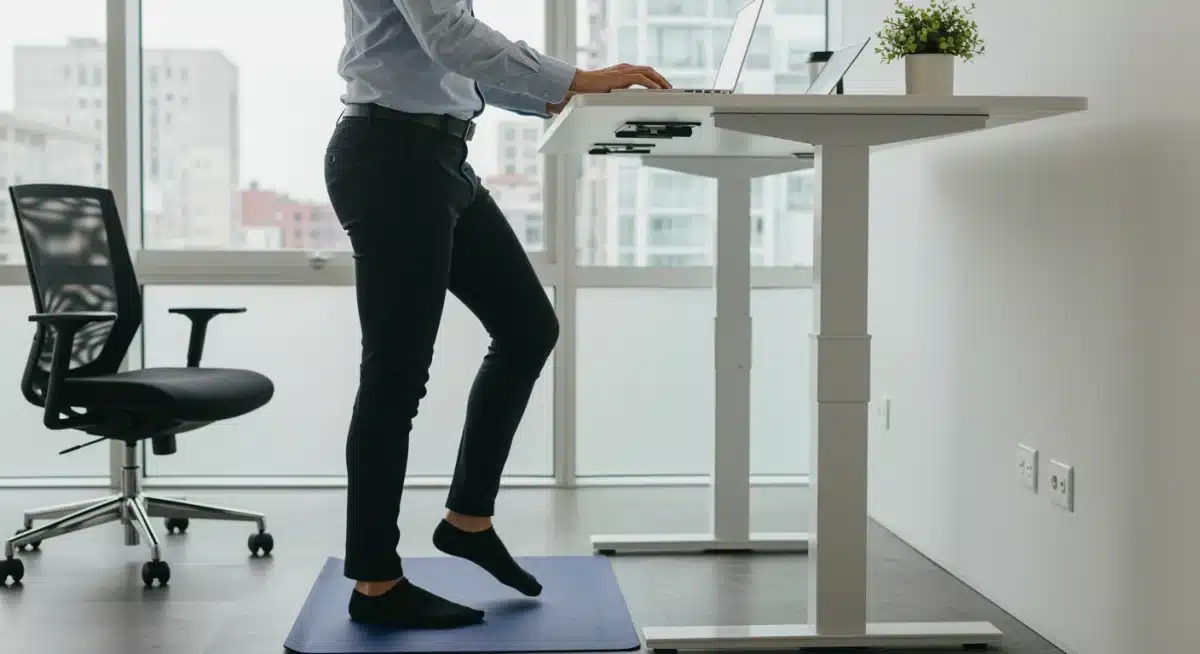
Investing in a standing desk or a desk converter is a primary step. Alternating between sitting and standing throughout the day can burn significantly more calories than sitting alone. Even without a standing desk, you can implement strategies like setting
a timer to stand up and walk around every 30-60 minutes.

-
Standing desk usage: Alternate between sitting and standing every 30-60 minutes.
-
Movement breaks: Take short walks, stretch, or do quick bodyweight exercises.
-
Active seating: Consider a stability ball or wobble board for core engagement.
Beyond standing, consider integrating simple movements while working. This could include doing calf raises while on a call, stretching during breaks, or even walking laps around your office or home during a long meeting. These small bursts of activity
add up, helping you easily reach that extra 300-calorie goal. Transforming your workspace into an active zone is a proactive step towards a healthier, more dynamic workday.
Solution 3: household chores and active leisure
Our homes and leisure time offer a wealth of untapped opportunities for calorie burning. Instead of viewing household chores as burdens, consider them as chances to move your body. Similarly, re-framing leisure activities to include more physical engagement
can significantly boost your daily energy expenditure.
Many household tasks, from vacuuming to gardening, are inherently physical. By approaching them with a bit more intensity or extending their duration, you can turn routine activities into effective mini-workouts. This integrated approach ensures that
movement becomes a natural and enjoyable part of your daily life, rather than a separate obligation.
Making chores count
Take gardening, for example. Bending, lifting, and raking are excellent forms of physical activity. Similarly, cleaning your home can be a vigorous workout if approached with energy. Put on some upbeat music and turn cleaning into a dance session. These
activities not only burn calories but also result in a tidier home and beautiful garden.
-
Gardening: Digging, weeding, and planting can burn significant calories.
-
Vigorous cleaning: Mopping, vacuuming, and scrubbing with enthusiasm.
-
DIY projects: Home improvement tasks often involve lifting, carrying, and moving.
For leisure, prioritize activities that involve movement. Instead of watching TV, go for a walk with family or friends. Play active games with children or pets. Explore local parks or hiking trails. These choices not only burn calories but also enrich
your life with experiences and social interaction. By consciously choosing active leisure and embracing chores as opportunities for movement, you can effortlessly burn hundreds of extra calories each day.
Solution 4: mindful movement and micro-breaks
The final solution focuses on integrating mindful movement throughout your day through micro-breaks and conscious choices. This approach emphasizes awareness and intentionality, ensuring that even the smallest opportunities for movement are utilized.
It’s about cultivating a habit of constant, subtle activity rather than relying solely on structured exercise.
Mindful movement isn’t about breaking a sweat; it’s about avoiding prolonged stillness. This can be as simple as standing up during phone calls, taking the stairs instead of the elevator, or stretching while waiting for your coffee to brew. These micro-breaks
add up, contributing significantly to your daily calorie expenditure and overall vitality.
Implementing micro-breaks effectively
Set reminders on your phone or computer to prompt you to move every hour. When you take these breaks, don’t just stand; try a few stretches, walk a short distance, or do some simple bodyweight exercises like squats or lunges. Even fidgeting can contribute
to NEAT, so don’t be afraid to tap your feet or shift your weight.
-
Stair challenge: Always choose stairs over elevators or escalators.
-
Stand during calls: Make it a rule to stand up for all phone conversations.
-
Fidget more: Subtle movements like tapping feet or shifting posture can add to calorie burn.
By adopting a mindset of mindful movement, you empower yourself to find activity in every moment. This continuous engagement with your body not only burns extra calories but also enhances focus, reduces stress, and improves overall physical comfort.
It’s a sustainable way to inject more vitality into your daily routine, aligning perfectly with the holistic fitness trends of 2025.
Tracking your progress and staying motivated
Once you begin integrating these practical solutions into your daily life, tracking your progress can be a powerful motivator. Understanding how many extra calories you’re burning and seeing the positive impact on your energy levels and overall well-being
can reinforce these new habits. This isn’t about obsessive counting, but rather about gentle awareness and celebration of your efforts.
Modern technology offers numerous tools to help with this. Fitness trackers, smartwatches, and smartphone apps can monitor your steps, active minutes, and even estimate calorie expenditure. While these tools provide valuable data, remember that the primary
goal is consistent movement, not just hitting a specific number. The data serves as encouragement and insight, not a rigid target.
Leveraging technology and setting realistic goals
Start by setting small, achievable goals, such as increasing your daily step count by 1,000 steps per week or incorporating two standing breaks into your workday. As these become habitual, you can gradually increase the intensity or duration of your
daily movements. Celebrating small victories is crucial for long-term motivation.
-
Fitness trackers: Use smart devices to monitor steps and activity levels.
-
Journaling: Keep a simple log of your active choices and how they make you feel.
-
Buddy system: Partner with a friend or family member for mutual encouragement.
Staying motivated also involves understanding your personal “why.” Whether it’s for better health, increased energy, or improved mood, keeping your core reasons in mind can help you push through days when motivation wanes. By tracking progress, setting
realistic goals, and tapping into your intrinsic motivation, you can sustain these positive changes and ensure that daily movement becomes an ingrained part of your healthier lifestyle.
The long-term benefits of consistent daily movement
The pursuit of burning an extra 300 calories daily through integrated movement extends far beyond immediate weight management. Consistent daily activity offers a cascade of long-term health benefits that contribute to a higher quality of life, aligning
with the holistic health perspectives emerging in 2025 fitness trends. It’s about building a resilient body and mind.
Regular, low-intensity movement has been shown to improve cardiovascular health, strengthen bones and muscles, enhance mood, and boost cognitive function. These benefits accumulate over time, creating a buffer against chronic diseases and promoting
overall longevity. It transforms your body into a more efficient, energetic system.
Beyond calorie burn: holistic health
Beyond the physical, consistent movement positively impacts mental health. It can reduce symptoms of anxiety and depression, improve sleep quality, and increase feelings of well-being. The simple act of moving your body, especially outdoors, connects
you with your environment and provides a mental break from daily stressors.
-
Cardiovascular health: Reduces risk of heart disease and improves circulation.
-
Bone density: Weight-bearing activities help maintain strong bones.
-
Mood enhancement: Releases endorphins, acting as natural mood lifters.
Embracing daily movement as a lifestyle, rather than a chore, leads to sustainable health improvements. It’s about fostering a mindful relationship with your body, where movement is an intuitive and enjoyable part of your existence. This long-term commitment
to consistent activity is the true essence of a healthy, vibrant life, moving beyond the traditional confines of the gym into every aspect of your day.
| Key Solution | Brief Description |
|---|---|
| Active Commuting | Walk or cycle for errands and parts of your commute to increase daily steps. |
| Transform Workspace | Utilize standing desks, take regular movement breaks, and incorporate active seating. |
| Household Chores & Leisure | Engage vigorously in chores and choose active recreational activities. |
| Mindful Movement | Take micro-breaks, choose stairs, and integrate subtle movements like fidgeting throughout the day. |
Frequently asked questions about daily movement
NEAT stands for Non-Exercise Activity Thermogenesis, which is the energy expended for everything we do that isn’t sleeping, eating, or structured exercise. It’s crucial for burning calories because it accounts for a significant portion of daily energy expenditure, helping to manage weight and improve metabolic health beyond traditional workouts.
You can burn an extra 300 calories by integrating active commuting (walking/cycling), transforming your workspace (standing desk, movement breaks), making household chores more vigorous, and practicing mindful movement through micro-breaks like taking stairs or fidgeting more. These small changes accumulate significant energy expenditure.
Yes, standing desks are effective. Alternating between sitting and standing throughout the workday can significantly increase calorie expenditure compared to prolonged sitting. They also improve posture, reduce back pain, and enhance focus, making them a valuable tool for an active workspace and boosting NEAT.
Household chores can be excellent calorie burners if approached with intensity. Activities like vacuuming, mopping, gardening, and even vigorous cleaning engage various muscle groups and elevate your heart rate. By making these tasks more active, you can turn routine responsibilities into effective mini-workouts, contributing to your daily movement goals.
Mindful movement, such as taking micro-breaks, choosing stairs, and conscious fidgeting, improves overall health by preventing prolonged sedentary periods. This boosts circulation, enhances mood, reduces stress, and contributes to better metabolic health and energy levels, fostering a more active and resilient body and mind without formal exercise.
Conclusion
Embracing the future of fitness means looking beyond the traditional gym setting and recognizing the profound impact of daily movement. By implementing the four practical solutions outlined—active commuting, transforming your workspace, leveraging household
chores and active leisure, and practicing mindful micro-breaks—you can effortlessly burn an extra 300 calories each day. These small, consistent changes not only contribute to weight management but also offer a multitude of holistic health benefits,
improving cardiovascular health, boosting mood, and enhancing overall vitality. The 2025 fitness trends emphasize integration, making health an intrinsic part of your lifestyle rather than a separate endeavor. Start today, and discover the power of movement
in every moment.